REHABILITATION AND RELEASE OF A STRANDED OLIVE RIDLEY TURTLE IN KARNATAKA, INDIA
SURANJANA GANGULY#, SHANTANU KALAMBI & NEELAGIRI SHREYA RAO
ReefWatch Marine Conservation, Kundapura, Karnataka, India
#suranjana@reefwatchindia.org
Download article as PDF
CASE PRESENTATION
On 29th June 2023, a live olive ridley sea turtle (Lepidochelys olivacea) (Figure 1) named ‘Froggy’ was reported stranded on Uppunda Beach (13.8405° N, 74.6139° E) in Udupi District of Karnataka, India. The turtle’s morphometrics were measured using a 1m flexible tape measure and weighing scale. The curved carapace length (CCL) was ~60cm, curved carapace width (CCW) ~64cm, tail length from plastron (TLP) ~6cm, and weight was 19.5kg. Given the CCL and short tail, the turtle was presumed to be a sub-adult female (Tripathy, 2016; Das et al., 2025).
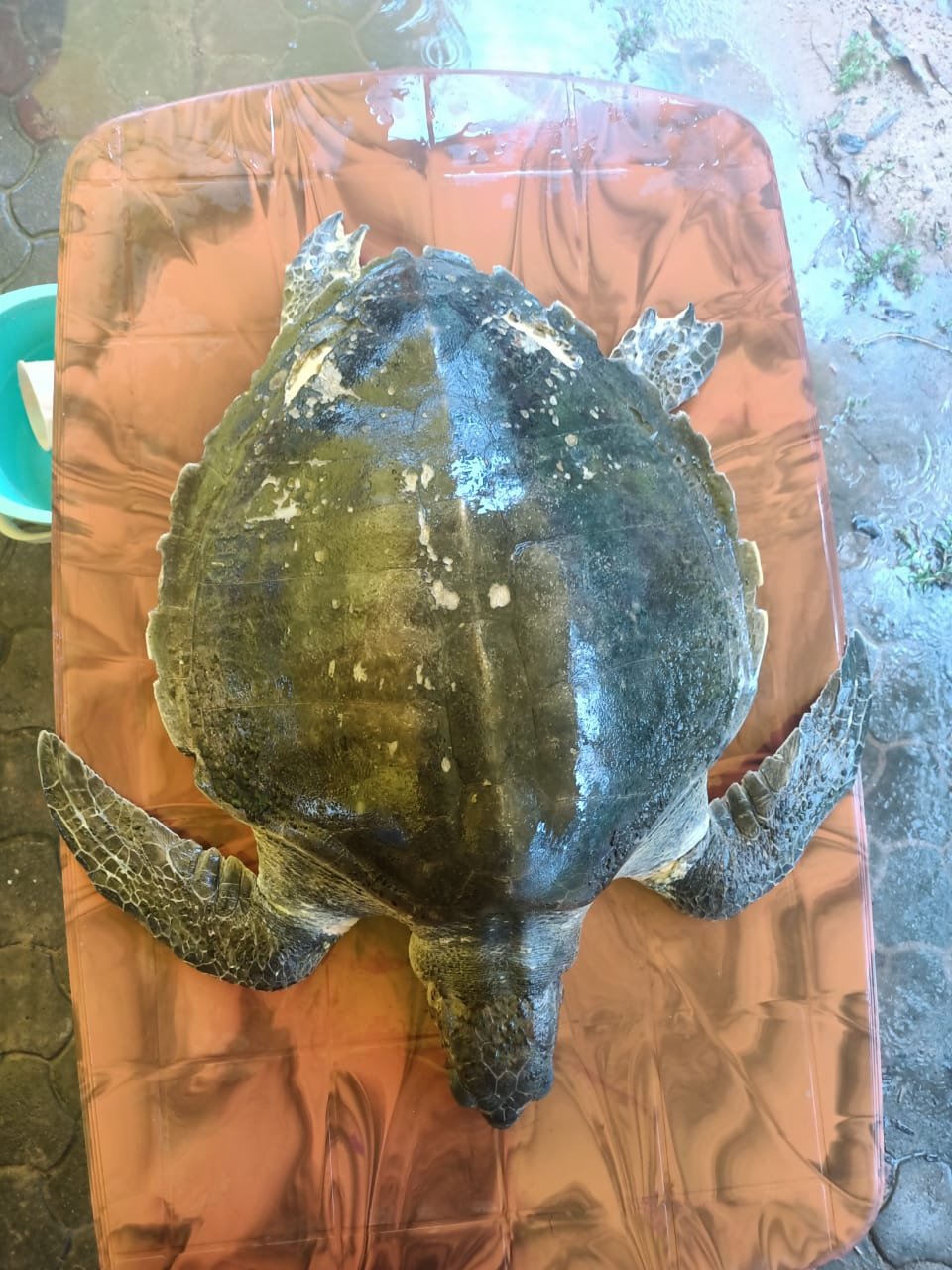
Figure 1. Live Stranded Olive Ridley Turtle Undergoing Treatment at Reefwatch in Karnataka, India. Image: Reefwatch.
The turtle was transported to the Reefwatch centre in Kundapur, Karnataka. On examination, the turtle presented with severe emaciation. There were small circular skin lesions on the ventral surface, bilaterally extending from the neck to the fore flippers. There were granulating strangulation marks on both fore flippers. The carapace was damaged, with small lesions and abrasions along the surface and chipped and damaged marginal scutes. The caudal carapace had semicircular injuries that created an appearance of depressions between the 6th and 7th costal and marginal scutes on both the left and right sides.
On day one, the turtle’s treatment included fluids RL (Ringer’s lactate solution, 200mL given subcutaneously), antibiotics injection (ceftazidime 400mg given subcutaneously), and vitamin B12 (12: 0.5mg/kg subcutaneously) and vitamin K (2mg/kg subcutaneously). After treatment, the turtle was placed in a tank ~75cm tall, ~130cm wide, and containing 500L of fresh water and 10L of seawater. The turtle was active and attempted to dive but experienced buoyancy issues in the cranial two quadrants. During feeding, the turtle ate two medium-sized sardine fishes.
On day five, a single dose of oral dewormer (250mg of pyrantel suspension) was administered. Additional treatments included daily subcutaneous fluid therapy, injections of ceftazidime (400mg given subcutaneously every 7 days), and supportive care in terms of wound dressing and vitamin B12, vitamin K and iron dextran. This treatment protocol of daily fluids and weekly antibiotics and vitamins was followed for 9 days. During this time the animal was eating independently and active but continued to show buoyancy issues and was unable to dive even after three doses of the antibiotic. Bloods were collected using a 21-gauge, 1.5-inch needle via the dorsal cervical vessel in a heparin tube and sent to a diagnostic laboratory for haematology and biochemistry analysis. Results of the blood analyses are presented in Table 1.
Table 1. Comparison of case profile (“Froggy”) with other turtles housed at the Reefwatch centre during this period. The mean and range representdata from 12 adult olive ridleys housed at the centre in 2023.
| Adult Olive Ridley Turtles | ||||||
| Blood Parameter | Froggy | Mean | SD | Range | n | |
| TLC (10³/μL) | 5.60 | 11.33 | 1.22 | 10.00-12.40 | 3 | |
| Creatinine (mg/dL) | 0.17 | 0.35 | 0.15 | 0.08-0.53 | 12 | |
| BUN (mg/dL) | 20.60 | 29.88 | 14.72 | 12.20-57.50 | 11 | |
| ALT/SGPT* (U/L) | 8.00 | 12.69 | 6.95 | 5.00-29.90 | 11 | |
| Total Protein (mg/dL) | 2.20 | 1.70 | 0.80 | 0.10-3.10 | 12 | |
| Albumin (mg/dL) | NA | 1.00 | 0.40 | 0.71-1.85 | 7 | |
*ALT (Alanine Aminotransferase)/SGPT (Serum Glutamic-Pyruvic Transaminase)
On day nine, a dry swab of pus was collected from a nasal passage and submitted for culture and sensitivity test, and the turtle was sent to the veterinary hospital for radiography. The radiographs indicated no foreign objects, but congestion was observed in the dorsoventral, lateral, and cranio-caudal views of the lungs.
On day 10, nebulisation was initiated with the addition of one crushed 100mg itraconazole capsule, 4mL of hypertonic saline solution (Sodium Chloride Inhalation solution USP 3% w/v), and 2mL of budecort (Budesonide Nebulizer Suspension BP 0.5 MG). Nebulisation continued for a total of 14 days. We also started applying thuja ointment (a homeopathic treatment) to skin lesions daily. The anthelminthic drug fenbendazole was given orally on the 12th, 13th and 14th days at 25mg/kg (SID x 3 days) and was repeated for three days again after 14 days.
The results of the culture and sensitivity tests were received on the thirteenth day; the culture report revealed no growth. We continued with our routine management for turtles, which included administering fluids, treating wounds, changing water in the tank, and feeding. The turtle was provided with fresh shrimp and fish every morning and evening, eating 10 to 35 medium-sized shrimp per day until it was defecating regularly and released.
After 32 days, when the turtle’s buoyancy was resolved and the weather improved, the turtle was successfully released into the sea, past the breaker line, from a boat in the early afternoon. The turtle was microchipped (Happy Pet Solution’ microchip ID 982091075147591) in the left front flipper on day seven so it could be identified if recaptured again after release.
Despite buoyancy issues and persistent injuries, the turtle showed gradual improvement during the rehabilitation period. Diagnostic tests revealed no significant abnormalities, and wound healing progressed satisfactorily. Multidisciplinary care, including veterinary treatment, supportive husbandry, and monitoring of clinical parameters, contributed to the successful rehabilitation and release of the stranded olive ridley turtle.
ACKNOWLEDGEMENTS
We acknowledge the Karnataka Forest Department for their assistance and for permitting us to handle this protected species (permit number IN-KA13466873654166R). We thank GMM Pfaudler Foundation and Siddhartha Lal Trust for funding this programme, and Nayantara Jain for facilitating permits, managing field logistics, and organizing funding. We are grateful to the ReefWatch Karnataka team for their work on the ground.
Literature cited:
Das, A.K., S.K. Mohapatra, B. Tripathy, A. Swain & A. Mohaptra. 2025. Do olive ridley turtles select mates based on size? An investigation of mate size preference at a major arribada rookery. Ecosphere 16: e70264. DOI: 10.1002/ecs2.70264.
Tripathy, B. 2016. Reproductive biology and conservation of olive ridley at the Rushikulya rookery of Odisha, India. International Journal of Conservation Science 7: 1105-1126.