POST-WAR TOURISM, COASTAL DEVELOPMENT AND SEA TURTLE NESTING BEACHES IN SRI LANKA
R.M. PABASARA ABEYWICKRAMA & RUPIKA S. RAJAKARUNA#
Department of Zoology, Faculty of Science, University of Peradeniya, Peradeniya, Sri Lanka
#rupika.rajakaruna@sci.pdn.ac.lk
Download article as PDF
INTRODUCTION
The end of Sri Lanka’s civil war in 2009 marked a dramatic turning point for the nation’s tourism industry, which had suffered significant setbacks due to three decades of prolonged conflict. International tourist arrivals declined sharply during the peak of the war, dropping to just 438,475 in 2008 (SLTDA Annual Reports, 2008). However, the conclusion of hostilities triggered a remarkable rebound, with arrivals rising to 654,476 in 2010 (SLTDA Annual Reports, 2010) and surpassing 1.5 million by 2014 (SLTDA Annual Reports, 2014). The government capitalised on the momentum with initiatives like the Tourism Development Strategy 2011–2016 (Ministry of Economic Development, 2011), which, along with improved international perception and the removal of travel advisories, positioned Sri Lanka as a top global destination, ranked first on The New York Times’ list of places to visit in 2010 (New York Times, 2010). Numbers declined during the COVID-19 pandemic but quickly grew again to reach a record 2.05 million in 2024 (SLTDA Annual Reports, 2024).
This rapid postwar tourism boom came with substantial ecological and social costs, particularly in coastal areas (Buultjens et al., 2016; Fernando, 2016). Aggressive development strategies, often aligned with state-led visions like Mahinda Chinthana– a national development framework for 2006–2016 aimed at raising GDP growth beyond 8% by integrating market-oriented policies with domestic aspirations, supporting local enterprises, and encouraging foreign investment-promoted infrastructure expansion in sensitive zones, especially in the war-affected northern and eastern provinces (Ministry of Finance and Planning, 2010). Military involvement in tourism operations led to contested land acquisitions and the transformation of conflict-scarred coastal zones into elite tourism destinations, frequently overlooking environmental regulations and local community rights (Ratnayake & Hapugoda, 2017). Drawing on a disaster capitalism framework (Klein, 2007), these projects often mirrored earlier development plans, such as the 2005 Tourism Master Plan (Robinson & Jarvie, 2008), where tourism was treated as a tool for economic revival rather than sustainable development.
With beach tourism emerging as one of the country’s leading attractions, hotel construction has surged along the southern, southwestern, and eastern coastlines. This rapid coastal development took a toll on sea turtles, with nesting habitats being severely altered or lost. Tourism infrastructure encroached upon critical nesting beaches, compromising the integrity of these ecosystems and threatening the success of long-term conservation efforts (Pieris, 2014; Ratnayake & Hapugoda, 2017).
Sri Lanka hosts sea turtle nesting beaches for five species- the green (Chelonia mydas), leatherback (Dermochelys coriacea), hawksbill (Eretmochelys imbricata), loggerhead (Caretta caretta), and olive ridley (Lepidochelys olivacea) turtles- and supports foraging populations of these same species in its coral reefs and seagrass beds (Bennett, 1843; Deraniyagala, 1939; Wickramasinghe, 1981; Amarasooriya, 2000). The important sea turtle nesting sites are distributed along the southern, southwestern, and eastern coasts of Sri Lanka (Rajakaruna et al., 2020) (Figure 1).
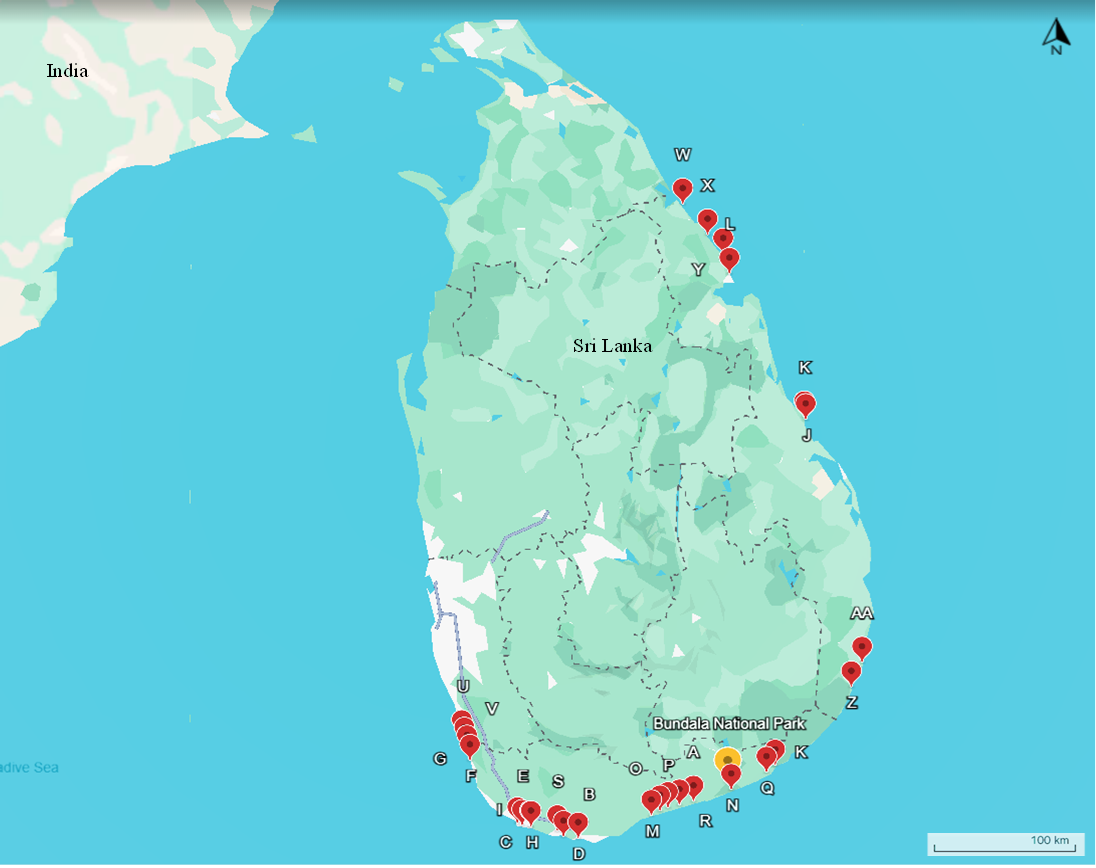 Figure 1. Major Sea Turtle Nesting Beaches of Sri Lanka and Bundala National Park. A) Godawaya, B) Mirissa, C) Habaraduwa, D) Polhena, E) Mihiripenna, F) Ahungalla, G) Induruwa, H) Koggala, I) Unawatuna, J) Kalkudah, K) Passikudah, L) Uppuveli, M) Rekawa, N) Bundala, O) Kahandamodara, P) Kalametiya, Q) Palatupana, R) Ussangoda, S) Weligama, T) Yala, U) Bentota, V) Kosgoda, W) Arisimalai, X) Kuchchaveli, Y) Nilaveli, Z) Okanda, AA) Panama.
Coastal development significantly disrupts sea turtle nesting habitats by modifying dunes, altering beach profiles, compacting sand, installing shoreline armouring, accumulating debris, and increasing human activity, all of which contribute to reduced nesting success (Salmon, 2006). Artificial lighting from hotels along the beach can pose a major threat, as it interferes with both nesting and hatchling orientation. Female turtles often avoid brightly lit beaches, favouring darker zones shaded by tall structures. This behaviour leads to nest clustering, which heightens the risk of hatchling mortality (Gyuris, 1994; Salmon et al., 1995). Hatchlings are especially vulnerable to artificial lights, which can misguide them inland instead of toward the ocean. This misorientation results in exhaustion, dehydration, predation, and death from vehicle strikes or exposure to extreme temperatures (Witherington, 1997).
We examined post-war coastal development patterns and their implications for sea turtle nesting beaches in Sri Lanka in the context of multiple socio-environmental disturbances. The study aimed to (i) assess land-use and coastal infrastructure changes along key nesting beaches between 2008 and 2024 using Google Maps imagery, (ii) classify and compare the intensity of coastal development across nesting sites, and (iii) evaluate how major disturbance events, including the 2004 tsunami, post-war tourism expansion, the 2019 Easter Sunday attacks, and the COVID-19 pandemic, have collectively influenced coastal development dynamics and nesting habitat conditions.
LAND USE CHANGES THROUGH GOOGLE MAP IMAGERY FROM 2008 TO 2024
We compared Google Maps images of sea turtle nesting beaches along the western, southwestern, southern, and eastern coasts of Sri Lanka in 2008 and 2024 (Figure 1). Coastal development intensity was classified into three categories (low, medium, and high) based on visible anthropogenic modifications observed in Google Maps imagery for 2008 and 2024. “Low development” was applied to beaches with minimal or no visible built infrastructure, where natural coastal vegetation and dune systems remained largely intact. “Medium development” represented areas with moderate human modification, including scattered buildings, small-scale tourism infrastructure, and limited shoreline alteration. “High development” was assigned to heavily modified coastal stretches characterised by dense hotel or resort construction, extensive built infrastructure along the beachfront, and noticeable alteration or replacement of natural dune and beach vegetation systems.
The images revealed rapid coastal development, particularly along the eastern coast, where growth was previously limited by war, and along the southern and southwestern coasts due to the post-war tourism boom (Figure 2).
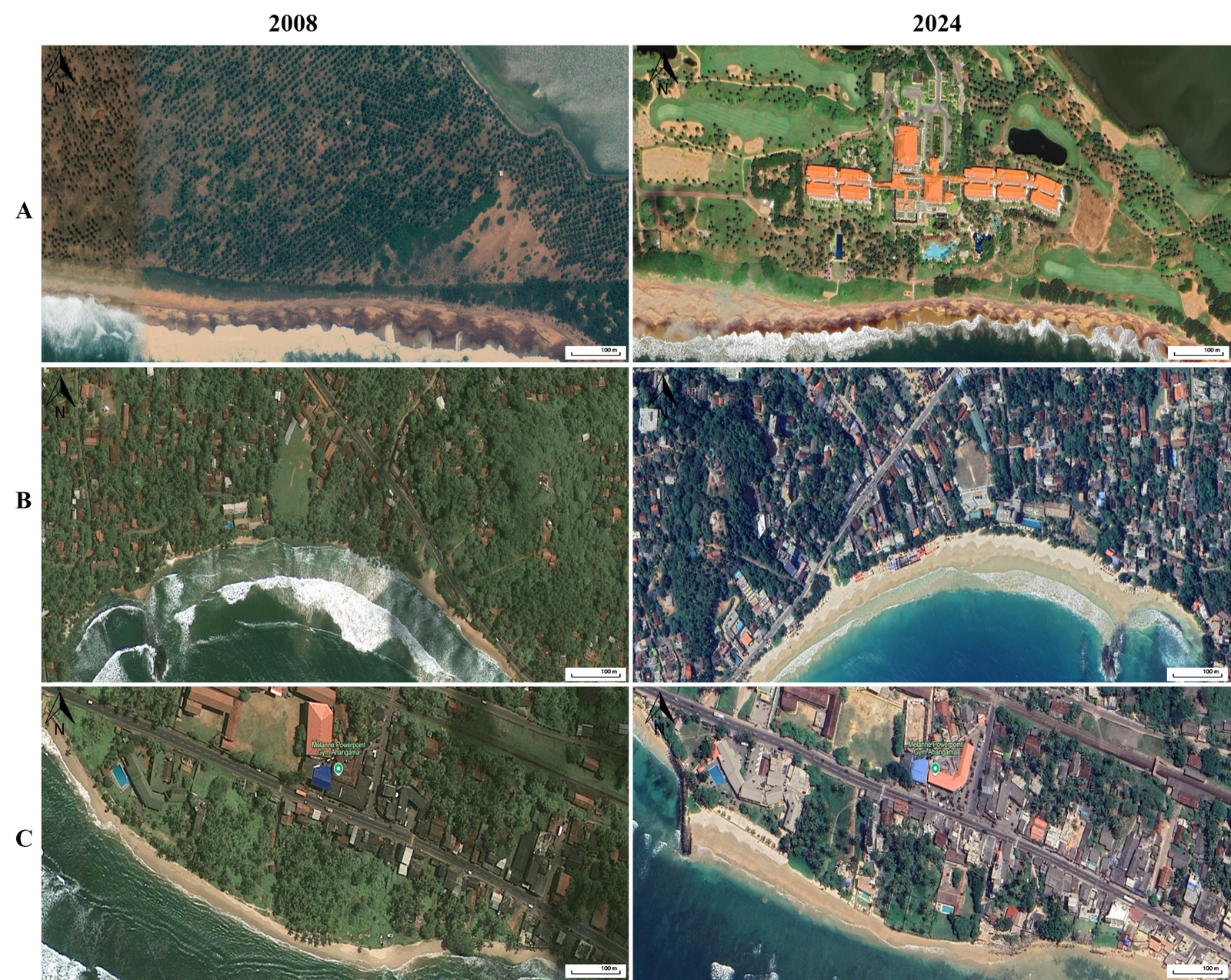
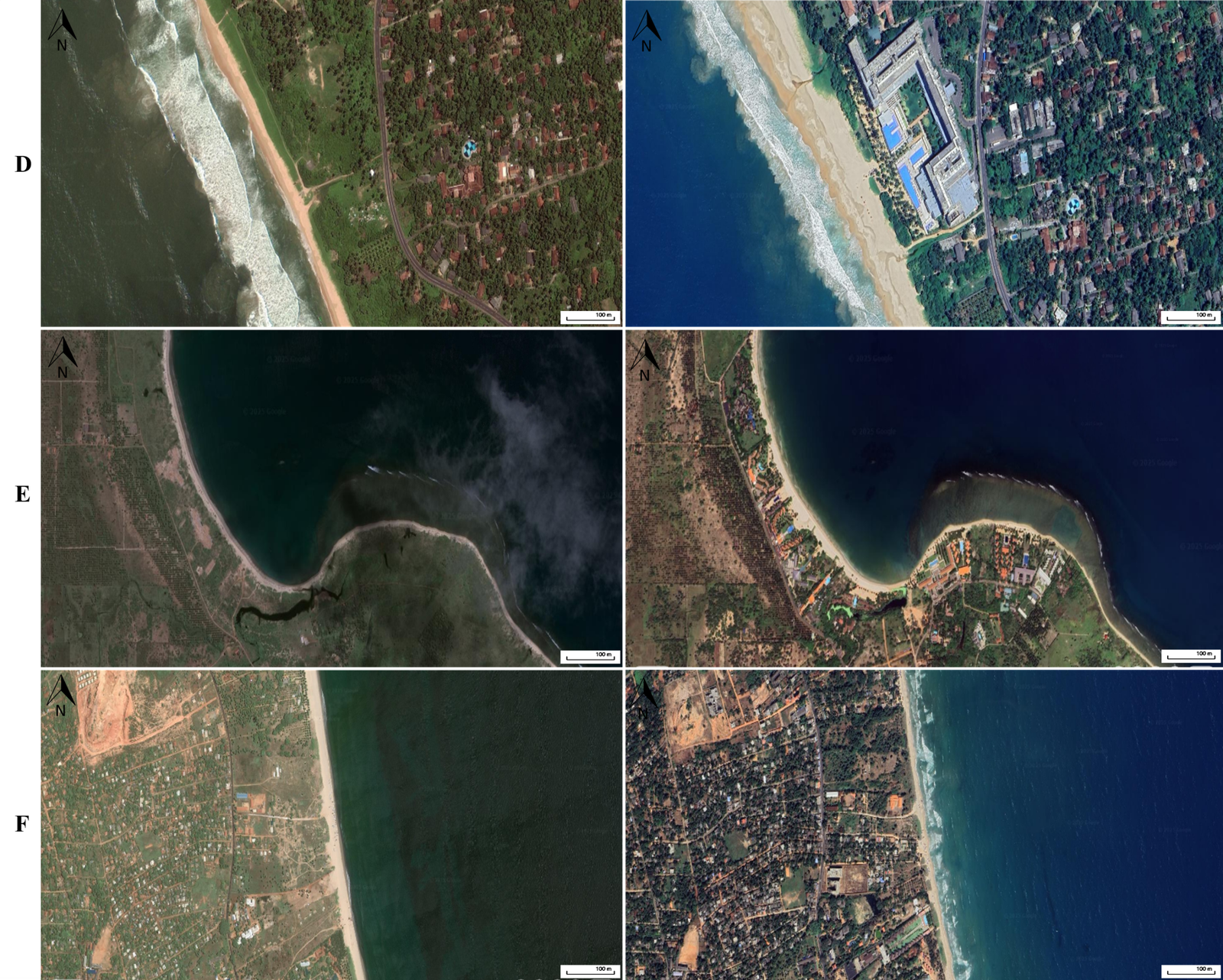
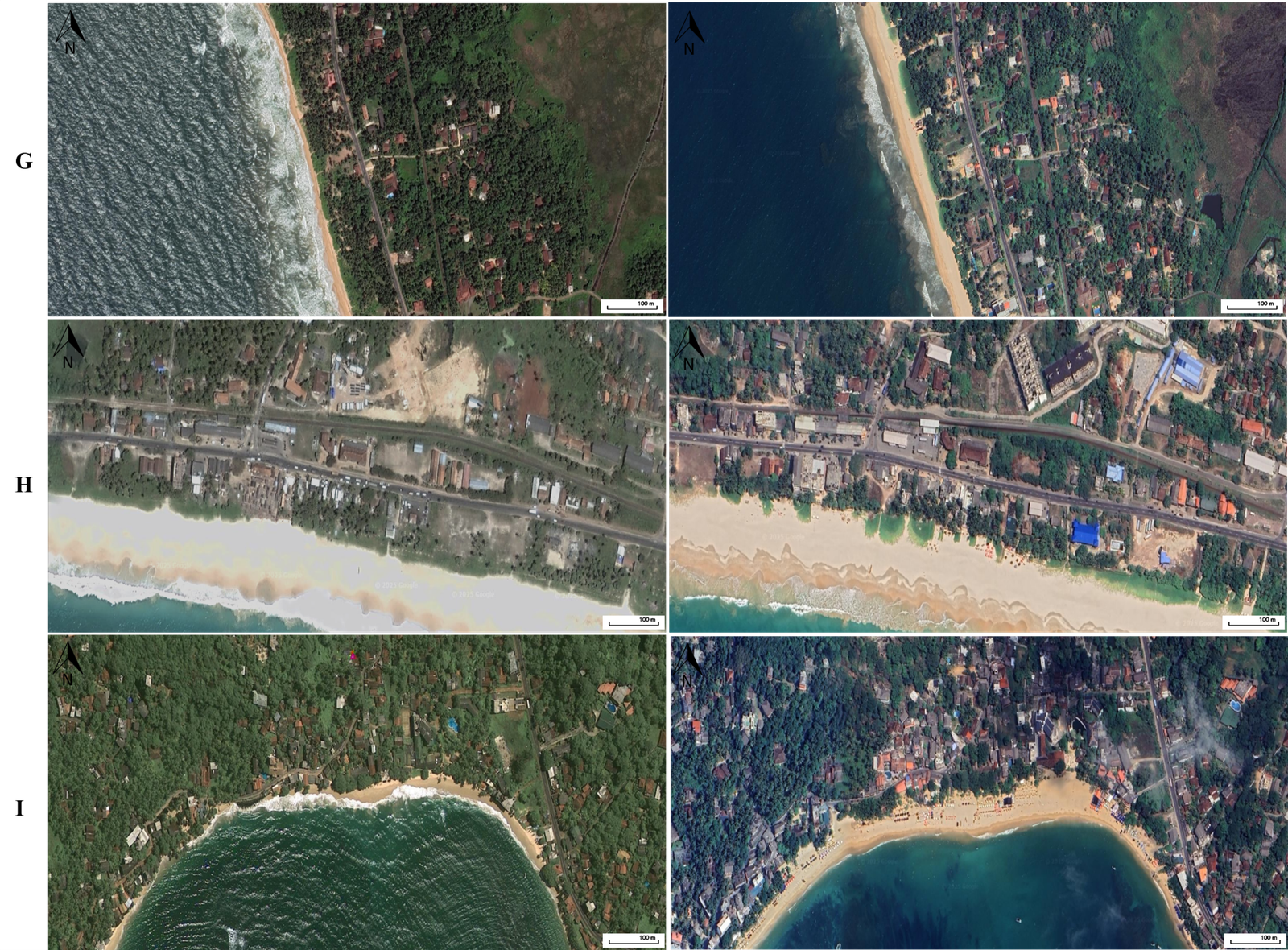
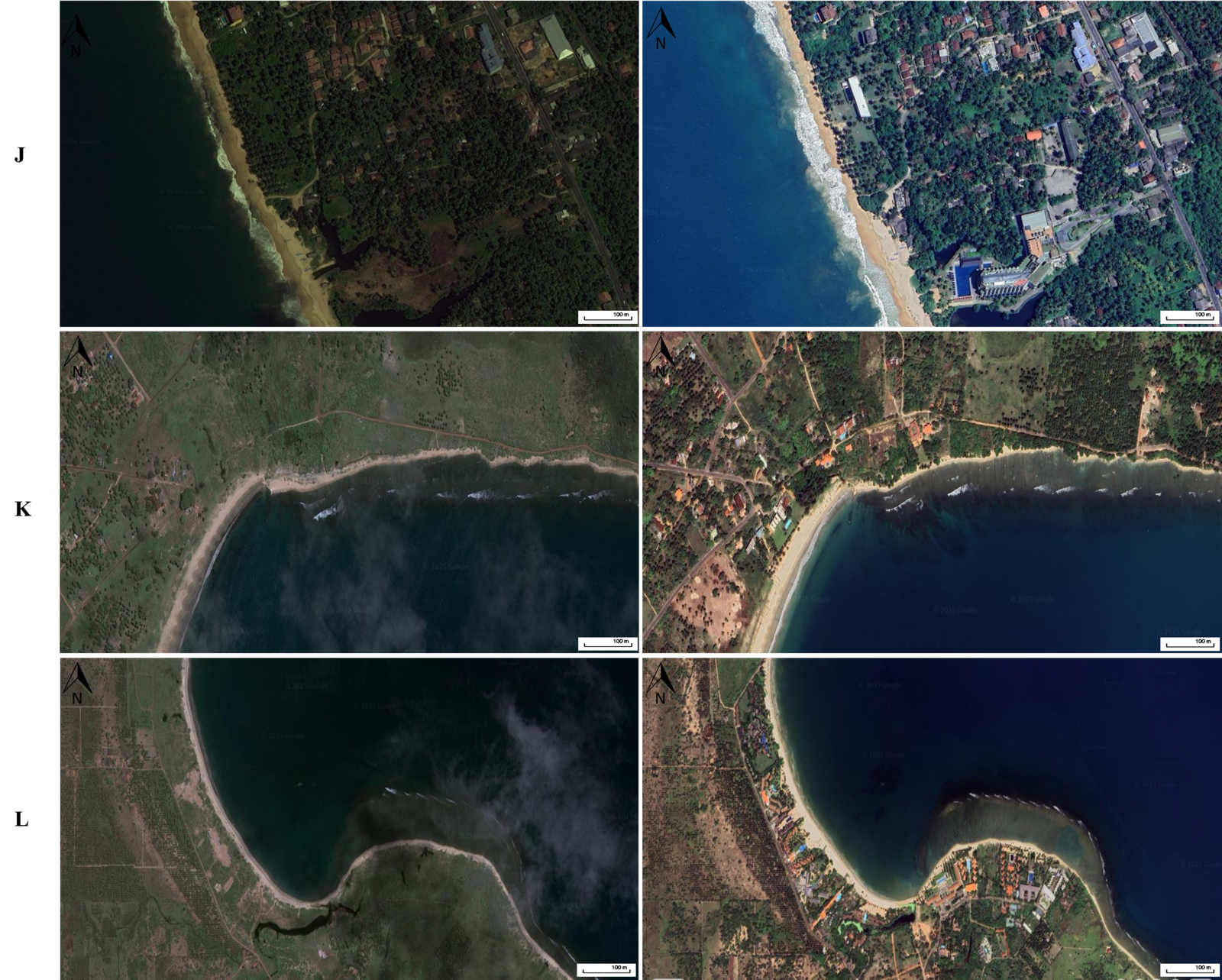
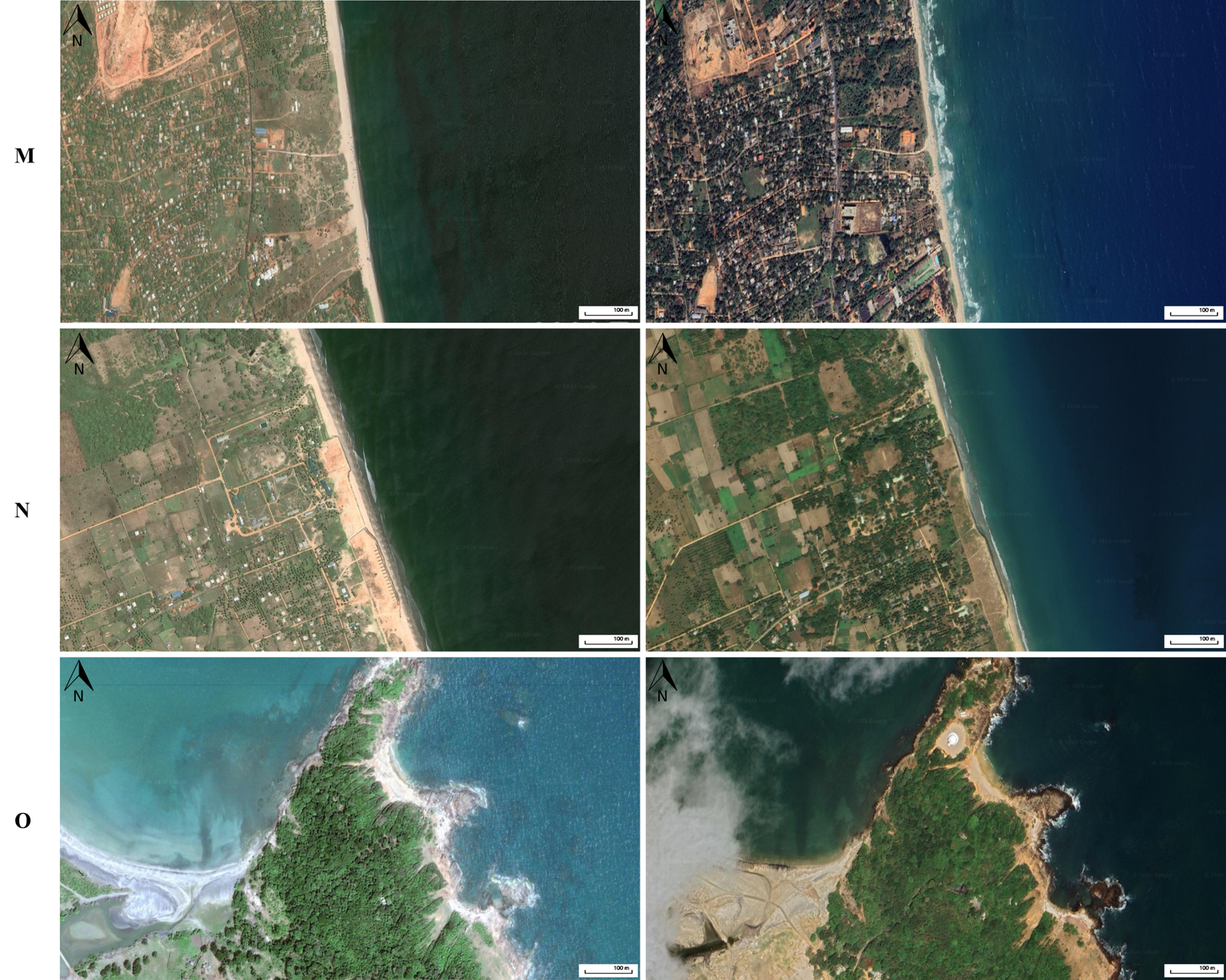
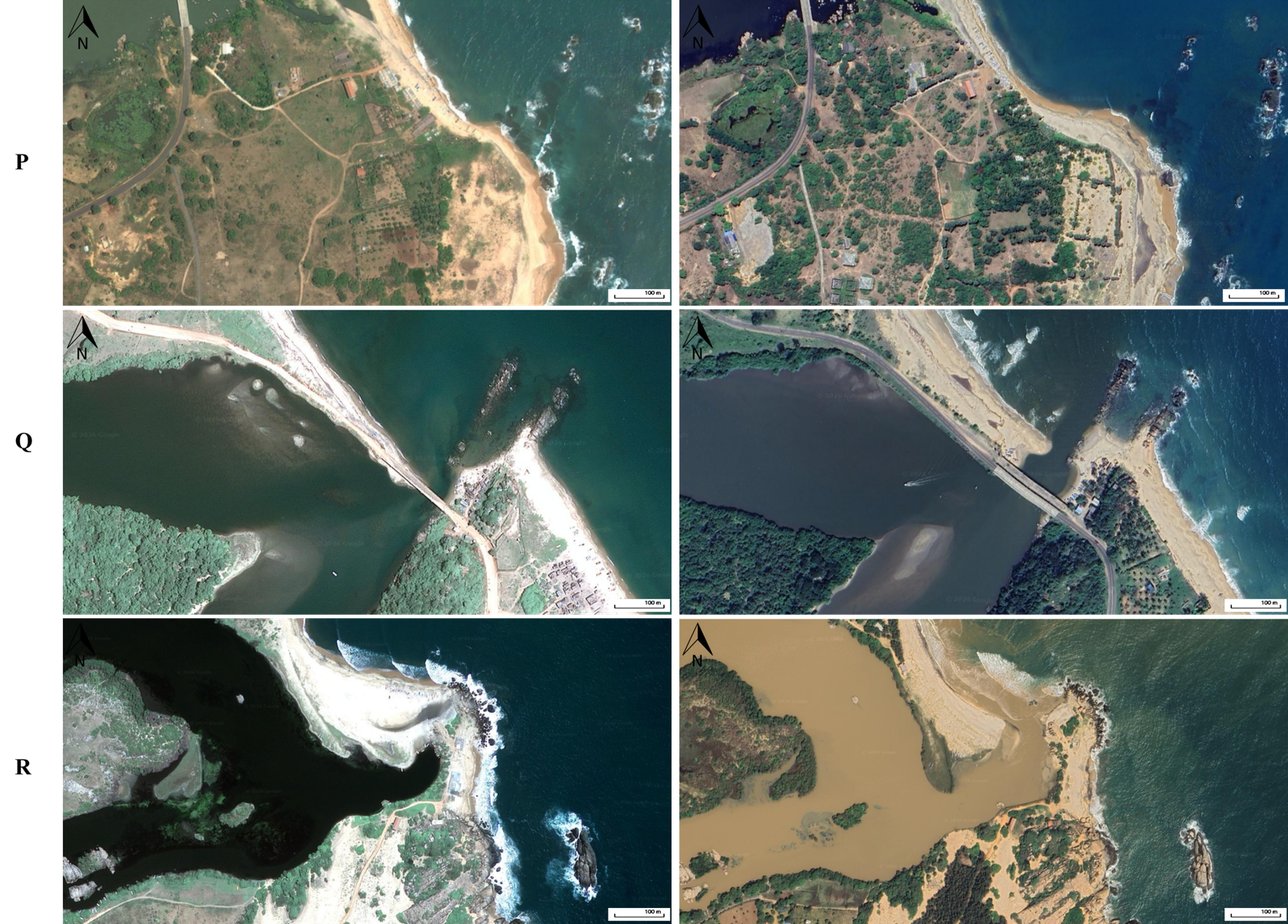
Figure 2. Coastal Development Along Sea Turtle Nesting Beaches of Sri Lanka: A) Godawaya, B) Mirissa, C) Habaraduwa, D) Polhena, E) Mihiripenna, F) Ahungalla, G) Induruwa, H) Koggala, I) Unawatuna, J) Kosgoda, K) Kalkudah, L) Passikudah, M) Uppuveli, N) Nilaweli, O) Arisimalai, P) Komari, Q) Kuchchaveli, R) Panama.
Beaches along the southern coast of Sri Lanka have experienced varying levels of disturbance due to hotel construction, especially following the end of the civil war in 2009. Among these, Godawaya, Mirissa, Habaraduwa, and Polhena (Figures 2A–2D) have been significantly affected, with a large-scale rise in hotel development leading to increased human activity and disturbance, disrupting sea turtle nesting behaviours. In contrast, Rekawa Beach (Figure 3), also on the southern coast, has remained relatively unaffected by tourism development pressures. It was declared a wildlife sanctuary by the Department of Wildlife Conservation (DWC) in 2006 due to its importance as the largest sea turtle rookery in Sri Lanka (Ekanayake et al., 2011). Similarly, Bundala Beach (Figure 3), located along the coastal boundary of Bundala National Park on the southern coast, has remained largely unaffected by hotel development. It was declared a sanctuary in 1969 and later designated as a National Park in 1993 (Ramakrishnan, 1991). Kalametiya Beach, another protected area, has also remained relatively undisturbed due to its conservation status (Kotagama & Bambaradeniya, 2006).
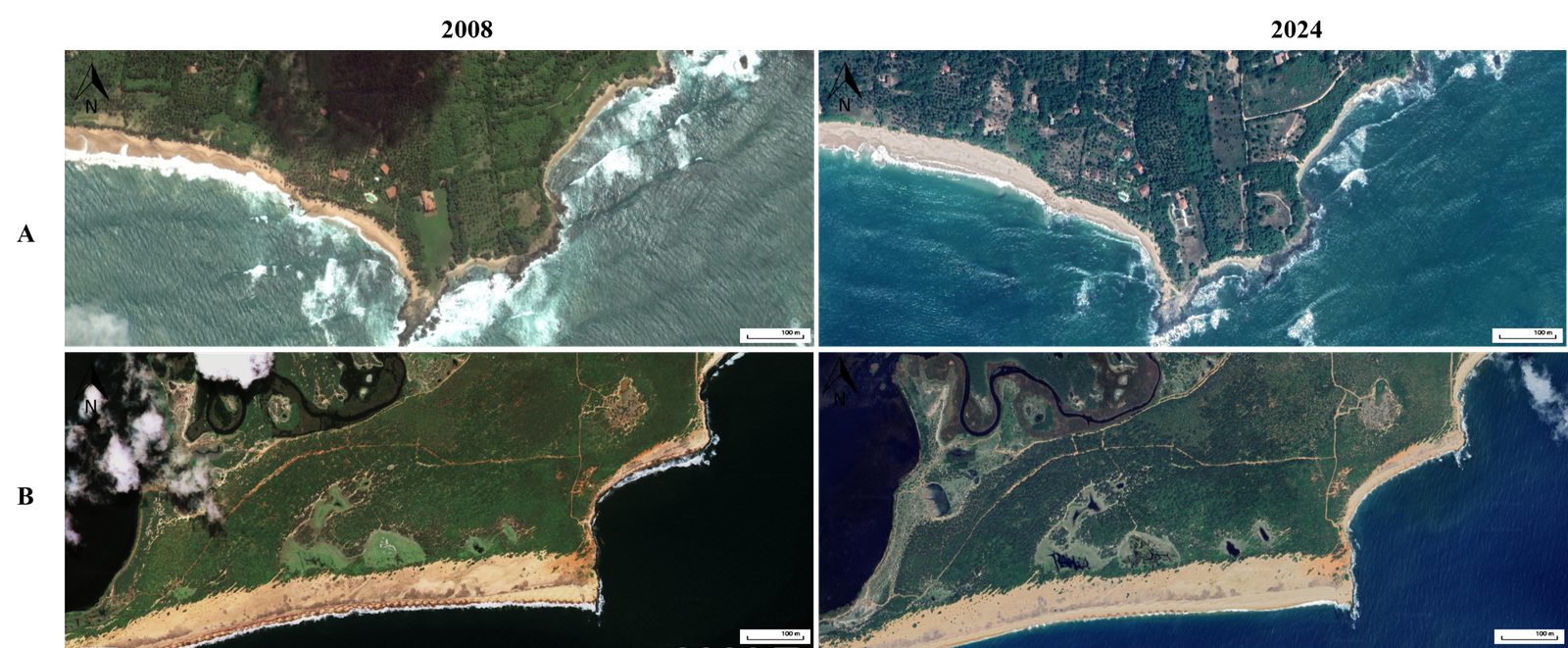 Figure 3. Undeveloped Nesting Beaches on the Southern Coast of Sri Lanka: A) Rekawa beach, B) Bundala beach.
Mihiripenna, Ahungalla, Induruwa, Koggala, and Unawatuna on the southwestern coast (Figures 2E–2J) of the country also experienced some hotel development after 2011, with disturbance levels ranging from moderate to high. Among these, Ahungalla (Figure 2F) saw hotel construction beginning in 2015, Bentota experienced new developments in 2019, and Unawatuna faced increasing tourism pressure with hotel construction expanding after 2009. Induruwa Beach underwent hotel development in 2021, and both Koggala and Mihiripenna experienced substantial growth in hotel infrastructure starting in 2011 and 2018, respectively. Although Kosgoda Beach (Figure 2J) experienced the development of a few hotels after 2011, the extent of disturbance here is lesser compared to other beaches in the region. Overall, the southwestern coast has been highly affected due to intensified tourism infrastructure following the post-war tourism boom.
Kalkudah, Passikudah, and Uppuveli on the eastern coast (Figures 2K–2M) also experienced some hotel development after 2011, with disturbance levels ranging from moderate to high. Passikudah (Figure 2L) experienced significant hotel construction beginning in 2011, and Uppuveli (Figure 2M) saw a substantial increase in developments after 2017, negatively affecting sea turtle nesting habitats. Nilaveli (Figure 2N) experienced moderate disturbance with a few hotels constructed after 2011, while Kalkudah (Figure 2K) underwent some hotel development after 2012, but to a lesser extent. In contrast, Arisimalai, Komari, Kuchchaveli, and Panama Beach (Figures 2O–2R) have remained largely unaffected, continuing to serve as relatively undisturbed nesting grounds for sea turtles.
IMPACT OF THE 2004 TSUNAMI ON NESTING BEACHES AND COASTAL TOURISM INFRASTRUCTURE
The Indian Ocean tsunami of December 2004 severely impacted Sri Lanka, demonstrating the vulnerability of sea turtle nesting beaches to natural disasters and also severely damaging tourism infrastructure, with many beachfront properties swept away or rendered unusable. Hotels and resorts along the southern and eastern coasts- especially in areas like Galle, Hikkaduwa, Arugam Bay, and Trincomalee- were completely destroyed by the waves. The high-energy waves eroded sandy beaches, swept away eggs, and scattered debris along the coastline, making it challenging for adult turtles to nest and for hatchlings to safely reach the ocean (Christiaanse et al., 2024; Staines et al., 2025).
The post-tsunami period saw a sharp decline in tourism, and the government swiftly introduced new coastal construction regulations, implementing 100-meter buffer zone on the south and west coasts. Construction of new buildings was prohibited within 100m of the shoreline in these areas and 200-meter buffer zone on the north and east coasts (Samaranayake, 2007). These zones were meant to prevent rebuilding in high-risk areas and allow for natural coastal defences like dunes and vegetation to recover. Buffer zones had benefits for marine turtle nesting (Kaplan et al., 2009). Unfortunately, as development crept back toward the shoreline, some of these gains were lost. Over time, enforcement of the buffer zone weakened. With the increase of tourists after the war was over, the government gradually reduced the buffer distance, first to 50m, then 40m, and eventually 30m, as economic pressures and tourism demands grew. Many residents and hotel owners displaced by the tsunami returned to rebuild near the shore, often in defiance of the original regulations, linking natural disaster recovery directly to patterns of coastal development and tourism-driven conservation efforts (Khazai et al., 2006).
EASTER SUNDAY BOMBING AND COVID-19 PANDEMIC
The Easter Sunday attacks on April 21, 2019, dealt a severe blow to Sri Lanka’s tourism sector, which had flourished in the post-war years. Unlike the civil war period (2003–2009), which did not directly target tourists, the coordinated bombings struck popular tourist areas, causing fear and resulting in a sharp decline in international arrivals. In May 2019, only 37,802 tourists visited the country, a staggering 70.8% drop compared to May 2018, followed by a 57.0% decrease in June (SLTDA, 2019). Just as the sector began a slow recovery, the COVID-19 pandemic triggered a global shutdown in early 2020, bringing international travel to a standstill. Travel restrictions and lockdowns further halted tourism activities throughout 2020 and into 2021, exacerbating economic losses in coastal regions that relied heavily on tourism revenues (Ranasinghe et al., 2021).
However, this prolonged decline in coastal tourism brought unintended ecological benefits, especially for prime sea turtle nesting beaches such as Rekawa, Kosgoda, and Bentota. With fewer visitors, reduced beachfront lighting, and minimal human presence, these beaches experienced less disturbance, lower incidences of illegal take of eggs, and reduced hatchling disorientation (Thilakarathne et al., 2024). Although these changes were not linked to physical alterations in coastal development, they highlight how fluctuations in human activity alone can significantly impact coastal ecosystems. The tourism shutdowns temporarily relieved pressure on fragile nesting habitats, underscoring the need for sustainable tourism practices that align with coastal conservation goals.
PRACTICAL SOLUTIONS AND NEW DIRECTIONS FOR SUSTAINABLE TOURISM AND DEVELOPMENT
Identifying practical solutions and charting new directions for sustainable tourism is essential to balance ecological conservation with economic growth in Sri Lanka’s coastal regions. The northern coast of Bahia in Brazil serves as an example, where the Brazilian National Sea Turtle Conservation Program (TAMAR) has employed a geospatial tool to identify key nesting areas using a Sensitivity Map that grades coastal areas based on their importance for sea turtle nesting (Lopez et al., 2015). This map informs coastal management policies by visually identifying priority nesting habitats, enabling targeted mitigation measures such as restricting development, reducing artificial lighting, or regulating tourist access in highly sensitive areas. By integrating scientific data into coastal planning frameworks, such tools support balanced development that considers ecological sensitivity in areas facing tourism-driven pressures. These efforts should be integrated into a broader coastal development strategy that promotes sustainable tourism, incorporating community participation, ecotourism education, and strong regulatory enforcement. Such an approach supports environmentally responsible development while ensuring the protection of vulnerable coastal ecosystems and wildlife, particularly in the context of post-war environmental recovery. Without careful environmental planning and legislation, poorly managed coastal development, especially in sea turtle nesting areas, can irreversibly harm the natural environment.
MITIGATING DEVELOPMENT PRESSURES
Implementing regulations for buffer zone violations and restricting coastal construction near nesting beaches can reduce habitat alteration and artificial light pollution. Studies show that “turtle-friendly” lighting strategies, such as fully shielded fixtures, low-intensity lighting, and long-wavelength (amber/red) lights, significantly reduce hatchling disorientation and improve nesting beach suitability for marine turtles (Witherington & Martin, 2000; Lorne & Salmon, 2007). Both developers and local communities engaged in coastal construction, especially projects related to tourism infrastructure, must be made aware of the ecological importance of sea turtle nesting habitats. Educational efforts should emphasise how poorly planned development and unregulated beach activities can severely disrupt nesting behaviours and reduce hatchling survival. To mitigate these impacts, it is crucial to implement restrictions on both physical construction near nesting sites and associated beach activities such as nighttime tourism events, vehicle movement, and artificial lighting. By aligning development practices with ecological safeguards, coastal development can proceed in a manner that minimises harm to sensitive wildlife and promotes long-term sustainability. Finally, ongoing monitoring and research are crucial for understanding the impacts of coastal development on sea turtle populations and assessing the effectiveness of mitigation strategies.
CONCLUSION
Despite a 25-year war and numerous disasters, including tsunamis, the Easter bombings, the global pandemic, and severe economic downturns, the Sri Lanka coast still supports sea turtles and their nesting beaches. The reduction in human activity during some of these periods allowed ecosystems and species like sea turtles to persist. However, this may be short-lived, as the resumption of human activity- whether through reconstruction or increased beach activities- can swiftly affect habitats and species. This paradox highlights the delicate balance between human impact and environmental resilience.
Literature cited:
Amarasooriya, K.D. 2000. Classification of marine turtle nesting beaches of southern Sri Lanka. In: Sea Turtles of the Indo-Pacific: Research, Management and Conservation. Proceedings of the Second ASEAN Symposium and Workshop on Sea Turtle Biology and Conservation (eds. Pilcher, N. & G. Ismail). Pp. 228–237. ASEAN Academic Press: London, UK.
Bennett, J.W. 1843. Ceylon and Its Capabilities. W.H. Allen & Co.: London, UK.
Buultjens, J.W., I. Ratnayake & W.A.C. Gnanapala. 2016. Post-conflict tourism development in Sri Lanka: Implications for building resilience. Current Issues in Tourism 19: 355-372.
Christiaanse, J.C., J.A. Antolínez, A.P. Luijendijk, P. Athanasiou, C.M. Duarte & S. Aarninkhof. 2024. Distribution of global sea turtle nesting explained from regional-scale coastal characteristics. Scientific Reports 14: 752. DOI: 10.1038/s41598-023-50239-5.
Deraniyagala, P.E.P. 1939. The Tetrapod Reptiles of Ceylon: Testudinates and Crocodilians. Colombo Museum: Colombo, Sri Lanka, and Dulau & Co. Ltd.: London, UK.
Ekanayake, E.M.L., T. Kapurusinghe, M.M. Saman & A.M.D.S. Rathnakumara. 2011. A declining trend of nesting frequency of sea turtles at the largest rookery in Sri Lanka. In: Proceedings of the 31st Annual Symposium on Sea Turtle Biology and Conservation (eds. Jones, T.T. & B.P. Wallace). Pp. 216. NOAA Technical Memorandum NMFS-SEFSC-631.
Fernando, S. 2016. Managing the post-war tourism development in Sri Lanka. International Journal of Business and Social Science 7: 90-100.
Gyuris, E. 1994. The rate of predation by fishes on hatchlings of the green turtle (Chelonia mydas). Coral Reefs 13: 137-144.
Kaplan, M., F.G. Renaud & G. Lüchters. 2009. Vulnerability assessment and protective effects of coastal vegetation during the 2004 tsunami in Sri Lanka. Natural Hazards and Earth System Sciences 9: 1479-1494.
Khazai, B., G. Franco, J.C. Ingram, C. Rumbaitis del Rio, P. Dias, R. Dissanayake & S.J. Kanna. 2006. Post-December 2004 tsunami reconstruction in Sri Lanka and its potential impacts on future vulnerability. Earthquake Spectra 22: S829-S844.
Klein, N. 2007. The Shock Doctrine: The Rise of Disaster Capitalism. Macmillan: London, UK.
Kotagama, S.W. & C.N.B. Bambaradeniya. 2006. An overview of the wetlands of Sri Lanka and their conservation significance. In: National Wetland Directory of Sri Lanka. Pp. 7-16. Colombo: Sri Lanka.
Lopez, G.G., E.D.C. Saliés, P.H. Lara, F. Tognin, M.A. Marcovaldi & T.Z. Serafini. 2015. Coastal development at sea turtle nesting grounds: efforts to establish a tool for supporting conservation and coastal management in northeastern Brazil. Ocean & Coastal Management 116: 270-276.
Lorne, J.K. & M. Salmon. 2007. Effects of exposure to artificial lighting on orientation of hatchling sea turtles on the beach and in the ocean. Endangered Species Research 3: 23-30.
Ministry of Economic Development. 2011. Tourism Development Strategy 2011–2016. Sri Lanka Tourism. https://www.scribd.com/document/213162289/Tourism-Master-plan-Sri-Lanka. Accessed on April 17, 2025.
Ministry of Finance and Planning. 2010. Mahinda Chinthana: Vision for the Future – Sri Lanka, The Emerging Wonder of Asia. Colombo. https://www.yumpu.com/en/document/read/34405498/sri-lanka-ministry-of-finance-and-planning/1. Accessed on April 17, 2025.
New York Times. 2010. The 31 Places to Go in 2010. https://www.nytimes.com/2010/01/10/travel/10places.html?hp. Accessed on April 17, 2025.
Pieris, A. 2014. Southern invasions: Post-war tourism in Sri Lanka. Postcolonial Studies 17: 266-285.
Rajakaruna, R.S., E.M.L. Ekanayake & P.A.C.N.B. Suraweera. 2020. Sri Lanka. In: Sea Turtles in the Middle East and South Asia Region: MTSG Annual Regional Report 2020 (eds. Phillott, A.D. & A.F. Rees). Pp. 245-265. IUCN-SSC Marine Turtle Specialist Group Publication.
Ramakrishnan, P.S. 1991. IUCN directory of South Asian protected areas. Journal of Tropical Ecology 7: 536.
Ranasinghe, R., A.C.I.D. Karunarathna & J. Herath. 2021. After corona (COVID-19) impacts on global poverty and recovery of tourism based service economies: An appraisal. International Journal of Tourism and Hospitality 1: 52-64.
Ratnayake, I. & M. Hapugoda. 2017. Land and tourism in post-war Sri Lanka: a critique on political negligence in tourism. In: Balancing Development and Sustainability in Tourism Destinations (eds. Saufi, A., I.R. Andilolo, N. Othman & A.A. Lew). Pp. 221-231. Springer: Singapore.
Robinson, L. & J.K. Jarvie. 2008. Post-disaster community tourism recovery: The tsunami and Arugam Bay, Sri Lanka. Disasters 32: 631-645.
Salmon, M. 2006. Protecting sea turtles from artificial night lighting at Florida’s oceanic beaches. In: Ecological Consequences of Artificial Night Lighting (eds. Rich, C. & T. Longcore). Pp. 141-168. Island Press: Washington DC, USA.
Salmon, M., R. Reiners, C. Lavin & J. Wyneken. 1995. Behavior of loggerhead sea turtles on an urban beach. I. Correlates of nest placement. Journal of Herpetology 29: 560-567.
Samaranayake, R.A.D.B. 2007. Pre- and post-tsunami coastal planning and land-use policies and issues in Sri Lanka. In: Proceedings of the Workshop on Coastal Area Planning and Management in Asia Tsunami-Affected Countries (eds. Broadhead, J.S. & R.N. Leslie). Pp. 167-198. RAP Publication: Bangkok, Thailand.
Sri Lanka Tourism Development Authority (SLTDA). 2008. Annual Report 2008. Colombo, Sri Lanka. https://www.scribd.com/document/19291297/Annual-Report-2008. Accessed on January 30, 2025.
Sri Lanka Tourism Development Authority (SLTDA). 2010. Annual Report 2010. Colombo, Sri Lanka. https://sltda.gov.lk/storage/common_media/ASR%2020101541160295.pdf. Accessed on January 30, 2025.
Sri Lanka Tourism Development Authority (SLTDA). 2014. Annual Report 2014. Colombo, Sri Lanka. https://sltda.gov.lk/storage/documents/8ce164b492a0b74f2c528b08249c3a4d.pdf. Accessed on January 30, 2025.
Sri Lanka Tourism Development Authority (SLTDA). 2019. Annual Report 2019. Colombo, Sri Lanka. https://srilanka.travel/SLTDA_documents/ASR%202019.pdf. Accessed on January 30, 2025.
Sri Lanka Tourism Development Authority (SLTDA). 2024. Year in Review 2024. Colombo, Sri Lanka. https://www.sltda.gov.lk/storage/common_media/Year_In_Review_2024_Final_2024_Jan-Dec_updated_20_04_2026.pdf. Accessed on January 30, 2025.
Staines, M.N., D.T. Booth, J.O. Laloë & G.C. Hays. 2025. The impact of sea level rise on nesting sea turtles: A global meta-analysis to highlight current understanding and knowledge gaps. Marine Biology 172: 171. DOI: 10.1007/s00227-025-04726-0.
Thilakarathne, E.P.D.N., W.A.S.W. Lakmini, K.P.U.T. Egodauyana, T. Bandara, A.B.K.M. Srimali, N.W. Ramawickrama, M.U.S. Maldeniya et al. 2024. Sea turtles are at risk: Unraveling the major threats and conservation challenges encountered by sea turtles in southern Sri Lanka. Ocean Science Journal 59: 35.
Wickramasinghe, S. 1981. Turtles and their conservation. Loris 15: 313-315.
Witherington, B.E. 1997. The problem of photopollution for sea turtles and other nocturnal animals. In: Behavioral Approaches to Conservation in the Wild (eds. Clemmons, J.R. & R. Buchholz). Pp. 303-328. Cambridge University Press, Cambridge, UK.
Witherington, B.E. & R.E. Martin. 2000. Understanding, Assessing, and Resolving Light-Pollution Problems on Sea Turtle Nesting Beaches. Florida Marine Research Institute Technical Report TR-2.Accessed on January 30, 2025.
Sri Lanka Tourism Development Authority (SLTDA). 2019. Annual Report 2019. Colombo, Sri Lanka. https://srilanka.travel/SLTDA_documents/ASR%202019.pdf. Accessed on January 30, 2025.
Sri Lanka Tourism Development Authority (SLTDA). 2024. Year in Review 2024. Colombo, Sri Lanka. https://www.sltda.gov.lk/storage/common_media/Year_In_Review_2024_Final_2024_Jan-Dec_updated_20_04_2026.pdf. Accessed on January 30, 2025.
Staines, M.N., D.T. Booth, J.O. Laloë & G.C. Hays. 2025. The impact of sea level rise on nesting sea turtles: A global meta-analysis to highlight current understanding and knowledge gaps. Marine Biology 172: 171. DOI: 10.1007/s00227-025-04726-0.
Thilakarathne, E.P.D.N., W.A.S.W. Lakmini, K.P.U.T. Egodauyana, T. Bandara, A.B.K.M. Srimali, N.W. Ramawickrama, M.U.S. Maldeniya et al. 2024. Sea turtles are at risk: Unraveling the major threats and conservation challenges encountered by sea turtles in southern Sri Lanka. Ocean Science Journal 59: 35.
Wickramasinghe, S. 1981. Turtles and their conservation. Loris 15: 313-315.
Witherington, B.E. 1997. The problem of photopollution for sea turtles and other nocturnal animals. In: Behavioral Approaches to Conservation in the Wild (eds. Clemmons, J.R. & R. Buchholz). Pp. 303-328. Cambridge University Press, Cambridge, UK.
Witherington, B.E. & R.E. Martin. 2000. Understanding, Assessing, and Resolving Light-Pollution Problems on Sea Turtle Nesting Beaches. Florida Marine Research Institute Technical Report TR-2.