A COMPREHENSIVE REVIEW OF SEA TURTLES IN PAKISTAN: CONSERVATION CHALLENGES AND OPPORTUNITIES
KASHIF AYOUB KHAN1,#, USMAN IQBAL1, STEPHANIE KÖHNK1, JANE R. LLOYD1, SAEED UL ISLAM2, ZAFAR JATAK3 & MARTIN STELFOX1
1Olive Ridley Project, Clitheroe, Lancashire, United Kingdom
2WWF-Pakistan, Abbottabad, Pakistan
3Lasbela University of Agriculture, Water and Marine Sciences, Balochistan, Pakistan
# kashif.ayoub@oliveridleyproject.org
Download article as PDF
INTRODUCTION
Pakistan boasts a coastline ~1,050km long, with ~250km situated in the Sindh province and ~800km in Balochistan province (Siddiqui et al., 2008). The Exclusive Economic Zone (EEZ) of Pakistan covers an area of about 240,000km2 in the northern Indian Ocean. The maritime zone of Pakistan, including the continental shelf, extends up to 350nm (650km) from the coastline. While the coastal zone up to 12nm from the coast is managed by Sindh and Balochistan provinces, the area from 12 to 200nm is under the management of the federal government (MFF Pakistan, 2016). The Sindh coastal region is located in the southeastern part of the country and includes the divisions of Karachi and Hyderabad. Based on geomorphological characteristics, this region can be divided into two main areas: the Indus Delta Creek and the Karachi coast (Siddiqui et al., 2008; MFF Pakistan, 2016). The coastline stretches from the Indian border at Sir Creek in the east to the Hub River in the west. The Delta Creek system stretches from Karachi to Sir Creek near the Indian border and is characterised by 17 major creeks, numerous minor creeks, mudflats, and a vast mangrove forest area. The Balochistan coast stretches from the mouth of the Hub River in the east to the middle of the Gwadar Bay, which borders Iran, in the west and has two coastal divisions: Kalat and Makran. Mangroves are found along the coast in relatively sheltered lagoons and bays (Mehmud et al., 1988; Siddiqui et al., 2008). Pakistan’s coast is home to diverse marine flora and fauna, yet comprehensive studies on species diversity have primarily focused on the Sindh coast. The Balochistan coast has remained unexplored due to its location and limited resources (Siddiqui et al., 2008).
In the Indian Ocean, six species of sea turtles are found. Five species of sea turtles have been reported from Pakistan’s coastal waters and nesting beaches (Kabraji & Firdous, 1984; Firdous, 2001; MFF Pakistan, 2016; Manzoor et al., 2022). The most common sea turtle in Pakistan’s waters is the green turtle followed by the olive ridley turtle, while loggerhead, hawksbill, and leatherback turtles are rarely observed (Kabraji & Firdous, 1984; Khan, 2013; MFF Pakistan, 2016). Green, olive ridley and loggerhead turtles have also been recorded nesting. Key nesting sites in Sindh province include Manora, Hawke’s Bay, and Sandspit. Important nesting locations in Balochistan are Hingol, Ormara, Astola Island, Pasni, Jiwani, and Gwadar (Siddiqui et al., 2008; Khan et al., 2010a; Khan, 2013; Manzoor et al., 2022).
This study aims to provide a comprehensive review of existing literature on sea turtles in Pakistan, focusing on their legal status and conservation efforts. By synthesising historical and recent publications with local knowledge and personal insights, we seek to develop an overview that identifies data gaps and highlights key challenges in sea turtle conservation within the country.
METHODS
This review is based on peer-reviewed publications, local knowledge, personal insights from conservationists in the country, as well as available grey literature on sea turtle conservation in Pakistan. Literature searches were executed on Google Scholar and the Google search engine to capture various types of literature available, using the following keywords: “Sea Turtles of Pakistan”, “Sea Turtle Conservation in Pakistan”, “Status of Sea Turtles in Pakistan”, “Endangered Species of Sea Turtles in Pakistan”, “Sea Turtle Research in Sindh and Balochistan”, “Sea Turtle Population in Pakistan”, “Sea Turtles in the Indian Ocean”, “Legal Status of Sea Turtles in Pakistan”, “Marine Resources of Pakistan”, and “Sea turtle Species Found in Pakistan”. Furthermore, articles were taken into account if found using specific terms such as “Sea Turtle Observer Program of WWF-Pakistan”, “Bycatch Entanglements of sea turtles in Pakistan”, “TED Program of WWF-Pakistan”, and “Marine Resources of Pakistan” on Google search engine to capture available reports about the coastal area and marine resources of Pakistan, particularly in connection with WWF Pakistan. Additionally, copies of student project reports on sea turtles from Hawke’s Bay and Sandspit, obtained from the Institute of Marine Sciences (IMS) at the Centre of Excellence in Marine Biology (CEMB) at the University of Karachi, were reviewed at the institution. For technical advice and review, we conducted unstructured interviews with three officials from LUAWMS University in Balochistan and WWF Pakistan. Additionally, we explored the official websites of WWF Pakistan, IUCN, UNDP, and the Olive Ridley Project (ORP) for additional literature. Information regarding the legal status of sea turtles as endangered species was compiled from a variety of sources. Key sources included the IUCN Red List website (iucnredlist.org), which provided insights for the broader geographical region, as well as the United Nations Environment Programme Pakistan Environment and Climate Change Outlook (ECCO) 2013 (UNEP, 2013). Information was also sourced from the publication on Coastal Marine Resources in Pakistan (MFF Pakistan, 2016) and the IUCN Marine Turtle Specialist Group Sea Regional Report for Turtles the Middle East and South Asia Region (Moazzam et al., 2021a).
Literature derived from the above search terms and listed publications, excluding literature reviews, were examined during the review. All available information about turtle species, study sample numbers, study locations, observed activity type and turtle life stages was extracted from the publications. Numbers were extracted from results tables, text, or figures and compiled into a summary table.
RESULTS
All search terms combined yielded a total of 128 peer-reviewed articles, including some duplicate literature. However, only 33 of these results were deemed directly relevant to our topic (Supplementary Table S1, available at https://github.com/OliveRidleyProject/Pakistan-Sea-Turtle-Literature-Review). Publication dates for these results ranged from 1877 to 2019, and covered reports of nesting, bycatch, foraging and resting, stranded, traded, satellite tagged turtles, or mentions in species lists (Figure 1). The highest number of literature references was published in 2010 with a total of six. Literature that was not peer-reviewed included three Master’s project reports from IMS. In addition, the ORP team obtained responses during 87 interviews with local fishers in Ibrahim Hydri, Kaka Pir, and Abdul Rehman Goth in Karachi, as part of the ORP community awareness program. The primary focal areas of these interviews included Manora, Hawke’s Bay, Sandspit, Ibrahim Hydri, and Clifton Beach. These information sources were reviewed to extract locations and sample sizes wherever possible (Figure 2).
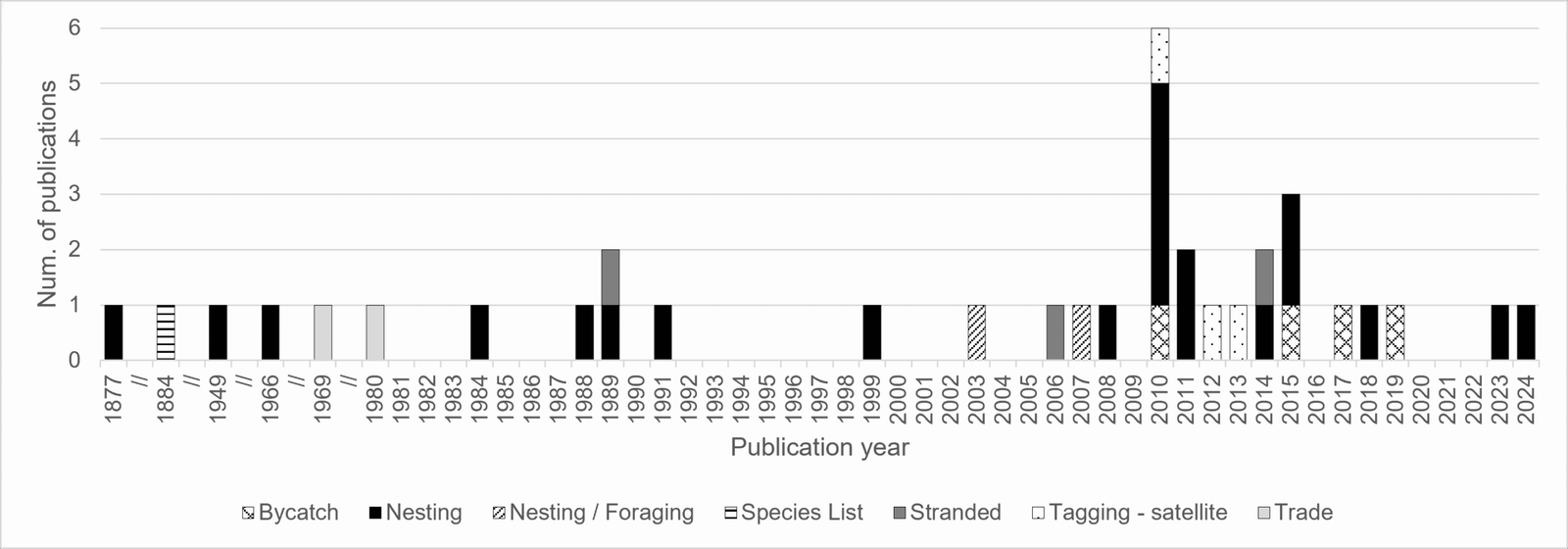 Figure 1. The Publication Dates and Research Subject of Sea Turtle Literature Included in this Review.
GADM shapefiles provide the Pakistan country and Division boundaries, and the Economic Exclusive Zone shape file is sourced from Maritime Boundaries Geodatabase (Flanders Marine Institute, 2023) created in ArcGIS Pro, with basemaps from EarthStar graphics. The data presented in the maps in this paper takes into consideration instances of overlapping data for a site; in these cases, the most recent and complete data was presented to prevent count inflation by duplicated reporting. Hawke’s Bay and Sandspit are mapped together, since the literature reviewed does not consistently separate the two beaches and nesting activities are often grouped together.
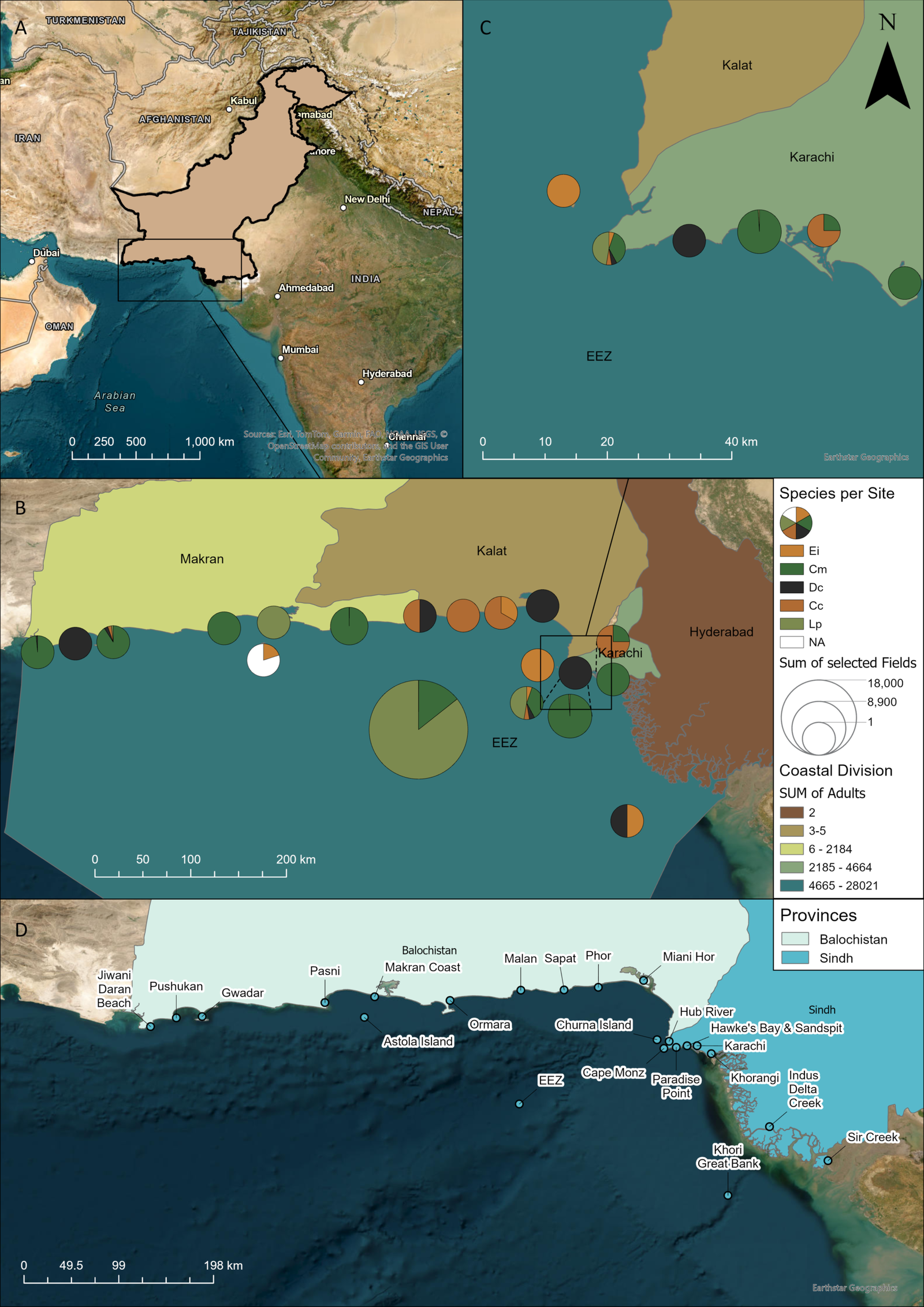 Figure 2. Reports of Sea Turtles in Pakistan, Including Nesting Activity, In-water Sightings, Strandings, Bycatch, and Harvest. (A) Pakistan; (B) Coastal Divisions; (C) Karachi Division; (D) Nesting Beaches.
For all sea turtle species reported from Pakistan, global IUCN Red List Assessments were available, but separate regional assessments specifically referring to Pakistan were only available for green and loggerhead turtles (Table 1).
Table 1. Global and sub-population Red List status and regional management units (RMUs) for Pakistan sea turtles.
| Sea Turtle | Global RLA Category (Reference) | Sub-population for RLA | Sub-population RLA Category and Trend (Reference) | RMU (Wallace et al., 2023) |
| Green | Endangered, Decreasing
(Seminoff, 2023) |
NIO (nesting) | Vulnerable, Decreasing
(Mancini et al., 2019) |
NWIO |
| Olive Ridley | Vulnerable, Decreasing
(Abreu-Grobois & Plotkin, 2008) |
Not assessed | Not assessed | WIO |
| Loggerhead | Vulnerable, Decreasing
(Casale & Tucker, 2017) |
NWIO | Critically Endangered, Decreasing
(Casale, 2015) |
NWIO |
| Hawksbill | Critically Endangered, Decreasing
(Mortimer & Donnelly 2008) |
Not assessed | Not assessed | NWIO |
| Leatherback | Vulnerable, Decreasing
(Wallace et al., 2013) |
Not assessed | Not assessed | None assigned |
Hawksbill turtle (Eretmochelys imbricata)
The hawksbill turtle is the rarest sea turtle species found in Pakistan and was assumed to be mostly migrating along the coasts of Pakistan with no confirmed nesting or breeding documented until the early 2000s (Minton, 1966; Khan, 2003). Hussain (2009) presents a photograph of a hawksbill turtle shell and mentions that Mertens (1969) saw a small shell of a hawksbill turtle at a shop in Karachi. Historical trade of the species is additionally confirmed through Japanese import records and Pakistan customs figures (Groombridge & Luxmoore, 1989).
Hawksbill turtles have been documented along the shores of Sindh and Balochistan between October and March, without a specific nesting site identified. Hawksbill turtle nesting was recorded in 2004 and 2007 on the coastline of Cape Monz, Mubarak village, Karachi and from July to December 2006 in Astola Island, Makran (Khan et al., 2010; Moazzam & Nawaz, 2019a). In 2013, hawksbills were spotted three times in the waters off the country’s coast (MFF Pakistan, 2016).
On a global scale, the hawksbill turtle is considered critically endangered (Mortimer et al., 2008), but specific population status and trends are unknown for Pakistan. The most common threat in open or offshore water of Pakistan, according to Manzoor et al. (2022), is entanglement in tuna gillnets, though only nine hawksbill turtles have been identified in bycatch surveys.
Olive ridley turtle (Lepidochelys olivacea)
Murray (1884) was one of the first to document the presence of sea turtles in Pakistan, identifying olive ridleys in Sindh. The coastline of Pakistan long served as a habitat for a small population of olive ridley turtles, which mainly nested at Sandspit and Hawke’s Bay in Karachi, Sindh Province according to Kabraji & Firdous (1984) and Firdous et al. (2011). The olive ridley turtle, considered Vulnerable on a global level (Abreu-Grobois & Plotkin, 2008; Sikandar, 2022), nests at Hawke’s Bay and Sandspit from March to October, with most nesting in August from 1980 to 1997, and in July and September in 2022 (Sikandar, 2022). Limited nesting was reported in Ormara and Astola Island, Makran. However, nesting numbers saw a sharp decline after 1987, with only two nests recorded in both 1996 and 1997, and no nesting activity from 1998 to 2000 (Firdous, 1999, 2001, 2015). The Sindh Wildlife Department, Government of Sindh, conducted a tagging study from 1982 to 2013, tagged a total of 43 olive ridley turtles. Of these, seven returned after one year, one after two years, and one after three years (Firdous, 2010). After an oil spill on the Karachi coast in 2003 (ITOPF, 2003), the nesting of olive ridley turtles decreased, with no reported sightings after 2012 (Sinkander et al., 2022).
Recent studies showed the presence of olive ridley turtles in offshore waters (MFF Pakistan, 2016). One dead stranded individual was found in February 2010 (Moazzam & Nawaz, 2019b). One satellite tagged olive ridley turtle travelled from its nesting beach at Masirah Island, Oman, to the Makran coastline (Rees et al., 2012a).
Leatherback turtle (Dermochelys coriacea)
According to Minton (1966), there were no confirmed sightings of leatherback turtles in the waters of West Pakistan. Nonetheless, in June 1958, a photograph obtained with the assistance of J.A. Anderson (Firdous, 2006) emerged showing an adult leatherback turtle that had washed ashore at Hawke’s Bay, Karachi. Consequently, he concluded that no other local sightings were reported and suggested that leatherback turtles could potentially be observed nesting on the islands near the inlets of the Indus, Hyderabad. Firdous (1989) documented a dead leatherback turtle on 5th September 1988, stranded on the beach of Sandspit, Karachi. Consequently, Khan (2003) and Moazzam & Nawaz (2017) reported that the leatherback turtle inhabits the territorial waters of Pakistan. Specifically, this is based on four dead turtles found along the shores of Sindh and Balochistan and eight captures in gill nets (Moazzam & Nawaz, 2017). Additionally, a leatherback turtle was found dead in Miani Hor, showing signs of a possible boat strike injury (Sikandar et al., 2022).
There have been no formally verified reports of leatherback turtles nesting in Pakistan (Khan, 2003; Firdous, 2006). Recent surveys have been conducted by the ORP team to assess nesting distributions for all sea turtle species, but no nesting of leatherback turtles have been observed (Olive Ridley Project, Unpubl.).
Loggerhead turtle (Caretta caretta)
Although Minton (1966) did not observe any loggerhead turtles, he described the confirmed presence of the species in Pakistan. Ghalib & Zaidi (1976, in Sikandar, 2022) concluded that loggerhead turtles do not nest in Pakistan but included them in the list of sea turtles found in Karachi. Khan and Tasnim (1990), and Khan (2003) reported the presence of loggerhead turtles in Pakistan without providing specific details. As per Salam (2010), 60 loggerhead turtle nests were documented at Daran Beach, Makran; species identification was confirmed through observations of both adults and hatchlings.
Nesting loggerhead turtles (number not reported) that were flipper-tagged on Masirah Island in Oman have been found in Pakistan waters (Baldwin, 2003). The species has been sighted in the coastal waters of Balochistan in association with gillnet fisheries operations targeting tuna (Moazzam & Nawaz, 2015, 2019; Shahid et al., 2016; Manzoor et al., 2022). In February 2010, Khan (2010) verified the presence of two loggerhead turtle carcasses at Gwadar, West Bay, Makran and one individual successfully rescued and released. From December 2015 to April 2018, 11 specimens were found entangled in fishing gear (Moazzam & Nawaz, 2019b).
Green turtle (Chelonia mydas)
Green turtles have been recorded nesting in three of the four coastal divisions in Balochistan and Sindh province, with nesting beaches identified at Daran Beach, Gwadar, Pasini, Astola Island, Ormara, Cape Monz, Paradise Point, Sandspit, Hawke’s Bay, Manora beaches (Butler, 1877; Firdous, 1999, 2010, 2015; Moazzam et al., 2021a; Manzoor et al., 2022).
Shockley (1949) reported that green sea turtles were frequently observed along the Jiwani coast near the Iranian border. At a location known as “Turtle Cliff,” approximately a dozen turtles could often be seen at the same time. Additionally, during September to November 1945, a significant number of turtle tracks were documented along the beach. WWF (Pakistan) monitored the green turtle population in the area between 1999 and 2008. During this time, a total of 2,751 nests were protected in situ using regular monitoring, producing 91,776 hatchlings that were released into the sea. Research conducted by Waqas et al. (2011) focused on the conservation of green turtles at the sandy beach of Daran Beach by protecting 2,751 nests in situ, and this remains an important nesting site for the species. There is an additional threat to nesting turtles in Daran Beach with fuel smuggling activities, resulting in environmental pollution and habitat degradation; according to anecdotal reports this is an ongoing issue (Moazzam et al., 2021b).
Murray (1884) was one of the early researchers who documented the nesting of green turtles in Karachi at Gizri and Clifton beach, in Sindh Province. Additionally, a significant number of green turtles have been recorded nesting at Sandspit and Hawke’s Bay, Karachi (Kabraji & Firdous, 1984). According to Khanum et al. (2014), Hawke’s Bay is among the beaches with the highest density of green turtle nesting in Pakistan. From 1979 to 1997, a total of 17,048 nests were recorded and moved to hatcheries located above the high tide line on the same beach for protection from take and destruction of nesting sites in Sandspit and Hawke’s Bay (Firdous et al., 2011) with 7,940 nesting turtles being flipper tagged (Firdous, 2015). Firdous (2001) reports three long range flipper tag recoveries in between Lengeh and Dayyer (Iran), Bhaidar Island, Gulf of Kutch (India), and Beraisole Village (Eritrea).
A total of 14 green turtles were equipped with satellite transmitters at Daran Beach and one at Astola island in 2009-2012 (Khan 2013). After release, three of these turtles were suspected to have been lost to fisheries interactions. The majority of the turtles migrated west, with six turtles traveling and settling between Jiwani, Pakistan, and Bandar Abbas, Iran. The turtle from Astola island and one turtle from Daran migrated to the United Arab Emirates, near Um-Alqueen, and Qatar. The remaining two turtles followed the coast eastward towards India, with no clear end of the tracking location indicated by Khan (2013).
Legal status of sea turtles in Pakistan
The Convention on International Trade in Endangered Species of Wild Fauna and Flora (CITES) established in 1976, protects turtles by prohibiting the trade of all sea turtle species’ shell and any part of the body. Additionally, the 1987 Convention on Migratory Species (CMS) prioritises the protection and conservation of these sea turtle species. Pakistan recognises the IUCN Red List of Threatened Species and is a signatory to the CITES, as well as the Memorandum of Understanding on the Conservation and Management of Marine Turtles and their Habitats of the Indian Ocean and South-East Asia (IOSEA MoU, https://iosea-turtles.cms.int/). The IOSEA MoU as an intergovernmental agreement provides a framework for collaboration between States as well as non-governmental stakeholders to work together towards conservation goals. Through the IOSEA network and specialised regional meetings, such as the Northern Indian Ocean Marine Turtle Taskforce, Pakistan has access to international and regional expertise to support the development of local capacity for its specific conservation priorities.
Pakistan is a member of the Indian Ocean Tuna Commission, which aims to manage and conserve tuna species through scientific research, sustainable fishing practices, and regulatory frameworks in the Indian Ocean. As part of its sustainable fishing regulations, a fisheries observer programme to monitor bycatch, report fishing fleet sizes and mitigation measures should be implemented. In recent years, Pakistan has not met these requirements for compliance (IOTC, 2024).
In Pakistan, although turtles were not consumed locally, their population faced declines due to heavy harvest pressure in the late 1960s (Firdous, 2007). Thousands of turtles were killed in Balochistan, with their flippers exported to Japan for the leather trade, amounting to a maximum of approximately 5,000 kg each year from 1976 to 1978 (Frazier, 1980; Groombridge et al., 1988). This trade occurred despite protective legislation being passed in both Sindh and Balochistan in the 1970s in response to the decline of sea turtle population and their nesting along Pakistani coastline. Sea turtles were protected under the Sindh Wildlife Protection Ordinance 1972 and the Sindh Wildlife Protection Act (1993), as well as the Balochistan Wildlife Act 1974 (Salm, 1976; Firdous, 2007). The Sindh Wildlife Protection Ordinance, implemented in 1972, protects all turtles and eggs in Sindh and imposes steep fines for the taking of turtles (Mohiuddine, 1975; Salm, 1975; Frazier, 1980; Groombridge et al., 1988). Additionally, the genera Dermochelys, Chelonia, Caretta, Eretmochelys, and Lepidochelys are listed as “Protected Animals” under this ordinance. In the Third Schedule of The Balochistan Wildlife Protection Act (BWPA) 1974, the same genera except Lepidochelys are listed as “Protected Animals”.
Governmental and non-governmental conservation efforts
The first documented project for the conservation of sea turtles in Pakistan was set up in 1979 by the Sindh Wildlife Department with initial funding from WWF-Pakistan. The project evolved into a sea turtle conservation initiative encompassing legal protection for nesting sea turtles, public awareness efforts, and an extensive hatchery program (Qureshi, 2006; Sikandar et al., 2022).
In 1979, one hatchery was established at Hawke’s Bay and two at Sandspit, each measuring 24 meters by 24 meters (see Phillott et al., 2018). These hatcheries aimed to mitigate threats such as predation by feral dogs, human egg collection, and other human disturbances to nests by providing a controlled environment during the incubation period (Qureshi, 2006). Hatcheries released up to 30,000 hatchlings each season, with an average reported hatching success in these facilities of around 40%. However, this rate varies due to several factors, such as the handling of eggs during collection, the type of substrate used in the hatchery, and moisture levels of the substrate (Firdous, 2011; Phillott et al., 2018). Between 1982 and 1997, a total of 3,093 green turtles and 43 olive ridley turtles were tagged on the beaches of Hawke’s Bay and Sandspit in Karachi using size 19 Monel metal tags from the National Band and Tag Company in Kentucky, USA, on both front flippers of each sea turtle. Many of these tagged turtles were recaptured in local waters during the study (Firdous, 1991, 2010). Notably, one turtle was captured near Bhaidar Island in Gujarat, India, 223 days after tagging (Firdous, 1991).
WWF Pakistan implemented various research programmes in turtle conservation, such as monitoring green turtle nesting at Daran beach in Jiwani from 1999 to 2008. During this project, WWF protected nests in situ with protective wire mesh cages placed over the nest, 2,731 green turtle nests annually on average, leading to the emergence and release of 91,936 hatchlings into the sea (Waqas et al., 2011; Khan, 2013). While hatchery programmes are officially still in place, the current status and extent is not documented.
In October 2012, WWF Pakistan launched a Fisher’s Awareness Programme in Karachi aimed specifically at gill net fishers. This initiative has led to the release of approximately 25,000 to 30,000 entangled sea turtles back into the water each year since 2012. Among the released turtles, the olive ridley turtle is the most prevalent species, representing about 86% of the total sea turtle bycatch. In contrast, the green turtle accounts for approximately 14% of the total bycatch. (Moazzam & Nawaz, 2015; Shahid et al., 2016). Since 2015, the ORP in Pakistan has played a role in community awareness, outreach activities, and recovering ghost gear for sea turtle conservation. It also includes a comprehensive research program aimed at analysing the initial population of sea turtles at Hawke’s Bay and Sandspit beaches (see for example Olive Ridley Project, 2024, 2025).
The Wildlife Department of Sindh and Balochistan provinces, the Marine Fisheries Department, IUCN Pakistan, WWF Pakistan, and the ORP actively work on conserving sea turtles in Pakistan. One of ORP’s first initiatives was with the Abdul Rehman Goth (ARG) community, focused on preventing the loss of fishing gear and repurposing recovered ghost gear into marketable products. This initiative not only benefits the community financially but also reduces the risk of sea turtle entanglement. ORP has successfully recovered over 6.5 tons of ghost gear from local seas and beaches. Through its education and outreach activities, ORP has reached over 8 schools and approximately 2,000 children. The most commendable efforts of these Government and Non-Government organisations include raising awareness among local fisherfolks, setting up hatcheries, awareness of ghost gear and its recoveries, protecting turtle nesting beaches, and promoting the use of sea Turtle Excluder devices (TED) in trawl nets to decrease sea turtle mortality (MFF Pakistan, 2016; Shahid et al., 2016).
DISCUSSION
Pakistan, as a northern Indian Ocean (NIO) country, holds significant ecological and regional importance in the region due to the country’s diverse coastal areas and potential to support significant nesting sites for green turtles and olive ridley turtles. Sea turtles in Pakistan face threats such as bycatch, habitat degradation, and illegal take, despite efforts from the government and local NGOs for nest protection and awareness campaigns (Salm, 1975; Frazier, 1980). To address threats, legal measures were put in place in 1979, classifying turtles as a protected species (Frazier, 1980; Qureshi, 2006). Due to the migratory nature of sea turtle species, and taking into account RMUs for sea turtles which typically encompass several countries and jurisdictions (Wallace et al., 2023), conservation and protection efforts should be considered on a regional geographical scale.
A neighbouring country, India, has implemented more extensive conservation and research efforts aiming to understand the biology and protect the resident sea turtle populations. India hosts one of the world’s largest olive ridley mass nesting sites in Odisha, and strong legal frameworks for protection have been established through the Ministry of Environment, including the Wildlife Protection Act (1972) and the Environment Protection Act (1986). It has specific marine protected areas for turtle conservation, such as Gahirmatha Marine Sanctuary and Chilika Lake. Additionally, India requires the use of Turtle Excluder Devices (TEDs) on fishing vessels to reduce bycatch (Jeyabaskaran & Kripa, 2018), a practice that Pakistan has only recently begun to adopt in limited regions (Moazzam et al., 2021a).
Another country in the NIO, Sri Lanka, has a strong legal framework under the Fauna and Flora Protection Ordinance (1937) that protects sea turtles and their habitats. The country also implements conservation programmes, such as the Kosgoda Sea Turtle Conservation Project (KSTCP) aimed at safeguarding turtle nesting sites and educating local communities (Rajakaruna et al., 2009). KSTCP was established in 1988 and is a major conservation initiative located on Sri Lanka’s southwestern coast, near Kosgoda. Its main goals include protecting nesting sea turtles and their eggs from threats such as illegal take and habitat destruction (Rajakaruna et al., 2009; KSTCP, 2025). Meanwhile, Pakistan is still in the process of developing a sea turtle conservation framework. Sri Lanka’s KSTCP shows how effective integration of scientific research, community engagement, and eco-tourism can be. While Pakistan involves communities, it has not reached the same scale or economic integration as Sri Lanka.
India and Sri Lanka have stronger legal frameworks than Pakistan, and the latter requires better implementation. Additionally, both countries have well-established conservation programmes, whereas Pakistan’s efforts are newer and localised. Community engagement is more robust in Sri Lanka compared to the nascent initiatives in Pakistan.
Iran’s coastline is crucial for regional sea turtle conservation due to its location along migratory routes in the Indian Ocean and Persian Gulf. Iran’s conservation efforts are directly aligned with those in Pakistan, where key nesting locations such as Astola Island, Daran Beach, Sandspit & Hawke’s Bay support the same populations of sea turtles. Iran has enacted laws such as the Environmental Protection and Enhancement Act (2002) and the Wildlife Protection Law (1972) to safeguard endangered species, including sea turtles (Sardari et al., 2022), similar to the legal frameworks in Pakistan, including the Sindh Wildlife Protection Ordinance and the Balochistan Wildlife Act. It has designated Marine Protected Areas (MPAs) along its coast, particularly in Hormozgan Province and Qeshm Island, to safeguard nesting sites from human activities. Efforts to monitor and research in Iran include partnerships between environmental organisations and global entities to examine nesting behaviours and rates of hatching success; similarly, Pakistan participates in related initiatives through organisations such as WWF-Pakistan and the Sindh Wildlife Department, focusing on common regional goals. In both nations, local communities receive education on the significance of sea turtles, and NGOs collaborate with international allies to promote awareness and lessen the effects of coastal development (Ghayoumi et al., 2023). The existing programmes in Pakistan could potentially benefit from collaboration and learning from protective measures and practices put in place by Iranian organisations and government bodies.
Oman plays a crucial role in the conservation of sea turtles in the Indian Ocean due to its strategic location along the Arabian Peninsula’s southeastern coast. Key nesting sites include Ras Al Jinz, primarily for green sea turtles (Mendoca & Abi-Aoun, 2009), and Masirah Island, which historically had the world’s largest loggerhead turtle nesting site. Despite a decline in loggerhead populations (Willson et al., 2020), both sites are vital for conservation. Oman actively participates in regional agreements like IOSEA, CMS, and CITES, focusing on legal protections and preserving important nesting areas (Willson et al., 2021). Masirah Island not only supports Oman’s turtle populations but also affects those from neighbouring countries like the United Arab Emirates or Pakistan, as sea turtles migrate to feeding grounds along their coasts (Rees et al., 2012b; Pilcher et al., 2021). Addressing threats to these migratory turtles may require collaboration between Oman, Pakistan, and other regional nations.
Bangladesh offers safeguarding to sea turtles via the Wildlife (Conservation and Security) Act of 2012, and is a signee to various international agreements such as IOSEA, CMS and CITES (Islam, 2021). Nonetheless, the nation has a smaller number of officially designated and effectively managed marine protected zones and conservation initiatives when compared to India or Sri Lanka, but more than Pakistan (UNEP-WCMC, 2026a, b, c, d). In both Bangladesh and Pakistan, the disparity between legal protections and actual conservation capabilities underscores the necessity for improved data collection (Mahbub et al., 2020), institutional frameworks, better coastal management, and increased regional cooperation to protect sea turtle populations.
The Maldives’ Environment Protection and Preservation Act (1993) safeguards sea turtles and their ecosystems. The Maldives adopts a more proactive stance on marine conservation, emphasising sustainable tourism and the preservation of habitats (Frazier, 1980; Ross & Barwani, 1982; Groombridge & Luxmoore, 1989).
Research on sea turtles in Pakistan remains basic and calls for more extensive investigations in both coastal provinces, and particularly the divisions of Kalat and Hyderabad. While Pakistan is aiming to extend its initiatives for sea turtle conservation, it still faces many challenges in comparison to other nations in the northern Indian Ocean, including India, Sri Lanka, and the Maldives, which have well-established frameworks and active programmes in place.
Data gaps and challenges
After reviewing the literature on sea turtles in Pakistan, it is evident that there is limited data available, especially from Kalat and Hyderabad. Several publications addressed turtle populations, habitats, and nesting (Manzoor et al., 2022). Notably, the Sindh Wildlife Department and WWF Pakistan conducted significant studies along the Karachi coast. In 1979, hatcheries were established at Hawke’s Bay and Sandspit. However, the hatching success was <40% due to factors such as substrate moisture, egg exposure, and handling practices (Firdous, 1989, 2011; Phillott et al., 2018). To improve hatchling production from these hatcheries, it is essential to conduct more extensive research and provide educational training that addresses these issues and minimise data gaps.
Other key data, monitoring, and conservation gaps identified in this review are:
1. Presence, habitat use and population dynamics of sea turtle species: Historically, we have limited information on the population sizes, trends, and distribution of sea turtles in Pakistan including occurrence, distribution, and their nesting beaches except for Karachi and Daran Beach, Makran division.
2. Nesting site surveys: Pakistan is lacking in identifying and monitoring key or index nesting sites. While the Sindh Wildlife Department regularly surveys Hawke’s Bay and Sandspit beaches on the Karachi coast, there is still a need to develop data sharing principles and accessibility with the aim to strengthen opportunities for data analysis and the identification of conservation priorities. It is essential to protect critical habitats and implement conservation measures to safeguard nesting females and their nests. However, the Balochistan Makran coast needs to be explored for the nesting beaches.
3. Threat assessment and plan of action: While there are various threats to sea turtles in Pakistan, such as habitat degradation and loss, bycatch, and illegal take as described by different authors in the past, their extent and impact on each species is currently unknown. A thorough assessment of threats and their impact on sea turtles on nesting and in in-water habitats is needed as a basis for the development of conservation actions.
4. Coastal community engagement: There is a need to conduct awareness, knowledge exchange and educational campaigns within the coastal communities that share spaces with sea turtles. WWF Pakistan has engaged in various short-term projects to raise awareness among coastal communities about safe bycatch release, beach cleaning, and turtle conservation. However, consistent long-term initiatives are essential for future conservation efforts.
5. Government and NGO training programmes: It is crucial to train central individuals within relevant government bodies and NGOs, who are directly or indirectly involved in beach or coastal activities with sea turtles, to ensure consistent data collection and documentation, as well as ethical practices across all areas of Pakistan. Once those central individuals are established, future training of new personnel can be organised and managed internally. Collaboration and knowledge exchange with regional and international stakeholders should be pursued to facilitate a robust conservation framework in the country.
6. Genetic studies: Currently, no studies on population genetics have been conducted on sea turtles from Pakistan.
CONCLUSION
This review underscores the urgent need for comprehensive conservation efforts to protect sea turtles along Pakistan’s coasts, as well as further monitoring and research in currently understudied areas in Kalat and Hyderabad divisions. Despite the ecological significance of nesting sites, including Sandspit, Hawke’s Bay, Ormara, and Astola Island, these areas face severe threats from habitat degradation, plastic pollution, entanglement in fishing gear, and unregulated coastal development.
While protective legislation exists, enforcement requires improved governance and there continues to be a lack of coordination among different stakeholders combined with limited resources. The absence of a unified, long-term monitoring framework hampers effective conservation efforts. To address these challenges, a comprehensive approach is needed, encompassing habitat restoration, stricter regulations, enhanced community involvement, and sustained research funding to ensure the survival of sea turtles and protection of their habitats in Pakistan.
Literature cited:
Abreu-Grobois, A. & P. Plotkin (IUCN SSC Marine Turtle Specialist Group). 2008. Lepidochelys olivacea. The IUCN Red List of Threatened Species 2008: e.T11534A3292503. https://doi.org/10.2305/IUCN.UK.2008.RLTS.T11534A3292503.en. Accessed on June 02, 2025.
Baldwin, R., G.R. Hughes, R.I.T. Prince. 2003. Loggerhead turtles in the Indian Ocean. In: Loggerhead Sea Turtles (eds. Bolten, A.B. & B.E. Witherington). Pp. 218-232. Smithsonian Books: Washington, DC, USA.
Butler, E.A. 1877. Astola, a summer cruise in the Gulf of Oman. Stray Feathers (Calcutta) 5: 283-304.
Casale, P. 2015. Caretta caretta (North West Indian Ocean subpopulation). The IUCN Red List of Threatened Species 2015: e.T84127873A84127992. https://doi.org/10.2305/IUCN.UK.2015-4.RLTS.T84127873A84127992.en. Accessed on June 02, 2025.
Casale, P. & A.D. Tucker. 2017. Caretta caretta (amended version of 2015 assessment). The IUCN Red List of Threatened Species 2017: e.T3897A119333622. https://doi.org/10.2305/IUCN.UK.2017-2.RLTS.T3897A119333622.en. Accessed on June 02, 2025.
Firdous, F. 1989. Male leatherback turtle strands in Karachi. Marine Turtle Newsletter 47: 14-15.
Firdous, F. 1991. A turtle’s journey from Pakistan (Karachi) to India (Gujarat). Marine Turtle Newsletter 53: 18-19.
Firdous, F. 1999. Decline of marine turtle nesting populations in Pakistan. Marine Turtle Newsletter 83: 13-14.
Firdous, F. 2001. Sea turtle conservation and education program in Karachi, Pakistan. In: Sea Turtles of Indo Pacific: Research, Management and Conservation (eds. Pilcher, N. & G. Ismial). Pp. 45-59. ASEAN Academic Press: London, UK.
Firdous, F. 2006. Status of leatherback turtles in Pakistan. Indian Ocean & SE Asian Leatherback Tsunami Assessment. Pp. 106-158. https://iosea-turtles.cms.int/sites/default/files/document/MT_IO4_DOC09_DC-tsunami_report_Part4_Pakistan-Tanzania.pdf. Accessed on June 15, 2025
Firdous, F. 2007. Status of marine turtles on Karachi coast. International Journal of Biology and Biotechnology 4: 27-29.
Firdous, F. 2010. Studies on nesting and tagging of two species of marine turtles of Karachi coast. Pakistan Journal of Oceanography 6: 1-14.
Firdous, F. 2011. Studies on transplantation of marine turtles at Karachi Coast. Pakistan Journal of Scientific Research, Series B: Biological Sciences 54: 29-33.
Firdous, F. 2015. Marine turtle conservation in Pakistan with special reference to measures taken by Sindh Wildlife Department. In: Proceedings of the Regional Symposium on Sea Turtle Conservation in Asia, 24-25 March, 2015 Karachi, Pakistan. Pp. 94-104. IUCN: Karachi, Pakistan.
Firdous, F., S. Rahman & S. Barkati. 2011. The nesting dynamics of sea turtles at Karachi. International Journal of Biology and Biotechnology 8: 495-504.
Flanders Marine Institute 2023. Maritime Boundaries Geodatabase: Maritime Boundaries and Exclusive Economic Zones (200NM) Version 12. Available online at https://www.marineregions.org/. https://doi.org/10.14284/632 Accessed on June 16, 2025.
Frazier, J. 1980. Exploitation of marine turtles in the Indian Ocean. Human Ecology 8: 329-370.
Ghalib, S.A. & S.S.H. Zaidi. 1976. Observations on the survey and breeding of marine turtles of Karachi coast. Agriculture Pakistan 27: 87-96.
Ghayoumi, R., A. Charles & S.M. Mousavi. 2023 A multi-level analysis of links between government institutions and community-based conservation: Insights from Iran. Ecology and Society 28: 33. DOI: 10.5751/ES-14217-280233.
Groombridge, B., A.M. Kabraji & A.L. Rao. 1988. Marine turtles in Baluchistan (Pakistan). Marine Turtle Newsletter 42: 1-3.
Groombridge, B. 1989. Aerial survey of the Baluchistan coast (Pakistan). Marine Turtle Newsletter 26: 6-9.
Groombridge, B. & R. Luxmoore. 1989. The Green Turtle and Hawksbill (Reptilia: Cheloniidae): World Status, Exploitation, and Trade. https://coilink.org/20.500.12592/7q9rvz. Accessed on June 16, 2025.
Hussain, B. 2009. Studies on Population, Status, Distribution and Environmental Impact on Reptiles in the Vicinity of Karachi Coast. Ph.D. Thesis, Department of Zoology, University of Karachi, Karachi, Pakistan.
IOTC (Indian Ocean Tuna Commission) 2024. 2024 Summary Compliance Report for: Pakistan. Available online: https://iotc.org/sites/default/files/documents/2024/04/IOTC-2024-CoC21-sCR19-PAK_E.pdf. Accessed on November 24, 2025.
Islam, M.Z. 2021. Bangladesh. In: Sea Turtles in the Middle East and South Asia Region: MTSG Annual Regional Report 2021 (eds. Phillott, A.D. and A.F. Rees). Draft Report to the IUCN-SSC Marine Turtle Specialist Group. https://static1.squarespace.com/static/5e4c290978d00820618e0944/t/6202b7a3558d77165b8d82f1/1644345273467/MTSG-RR_Middle-East-South-Asia_2021.pdf. Accessed on June 15, 2026.
ITOPF. 2023. Tasman Spirit, Pakistan, 2003. https://www.itopf.org/in-action/case-studies/tasman-spirit-pakistan-2003/. Accessed on June 15, 2026.
Jeyabaskaran, R. & V. Kripa. 2018. Status of sea turtle conservation in India and the way forward. Marine Fisheries Information Service; Technical and Extension Series: 238: 13-17.
Kabraji, A.M. & F. Firdous. 1984. Conservation of Turtles, Hawkesbay and Sandspit, Pakistan. World Wildlife Fund Project, 1451, Pp. 52.
Khan, A. 2010. Records of loggerhead turtles on the Makran coast, Pakistan. Indian Ocean Newsletter 12: 13-14.
Khan, A. 2013. Pakistan wetlands programme’s marine turtle conservation efforts on Daran beach, Jiwani, Pakistan. Indian Ocean Turtle Newsletter 17: 26-30.
Khan, A., S.A. Ghalib & B. Hussain. 2010. Status and new nesting sites of sea turtles in Pakistan. Chelonian Conservation and Biology 9: 119-123.
Khan, M.S. 2003. Checkliste und Bestimmungsschlüssel der Schildkröten und Krokodile Pakistans. Testudo (Sigs) 12: 9-22.
Khan, M.S. & R. Tasnim. 1990. A field guide to the identification of herps of Pakistan. Part: II Chelonia. Biological Society of Pakistan Monograph 15: 1-15.
Khanum, F., S. Jamil, H. Kazmi & S. Shaikh. 2014. A spatio-temporal assessment of green turtle habitat at Hawkes Bay, Karachi through Geo-informatics techniques. Journal of Basic & Applied Sciences 10: 377-383.
KSTCP. 2025. Kosgoda Sea Turtle Conservation Project. https://www.kosgodaseaturtle.org. Accessed on May 23, 2025.
Mahbub, R.B., N. Ahmed & F. Yeasmin. 2020. Towards reducing the data gap in the conservation efforts for sea turtles in Bangladesh. Regional Studies in Marine Science 35: 101151. DOI: 10.1016/j.rsma.2020.101151.
Mancini, A., A.D. Phillott & A.F. Rees. 2019. Chelonia mydas (North Indian Ocean subpopulation) (errata version published in 2019). The IUCN Red List of Threatened Species 2019: e.T142121108A154845002. https://doi.org/10.2305/IUCN.UK.2019-2.RLTS.T142121108A154845002.en. Accessed on June 02, 2025.
Manzoor, U., M. Moazzam, S. Zubair, M.Z. Khan & B. Hussain. 2022. A review: Distribution, status and conservation of marine turtles in coastal areas of Pakistan. Canadian Journal of Pure and Applied Sciences 16: 5403-5417.
Mehmud, S., & M. Ishaq Mirza. 1988. Remote sensing activities in Pakistan: A status report. In: Report of the Fifth Session of the Intergovernmental Consultative Committee on the ESCAP/UNDP Regional Remote Sensing Programme and Proceedings of the Meeting of the Directors of the National Remote Sensing Centres/Programmes in the ESCAP Region. https://repository.unescap.org/server/api/core/bitstreams/cabb31bc-f9f8-4024-9777-087874b81d13/content. Accessed on June 15, 2026.
Mendonca, V. & B. Abi-Aoun. 2009. The sea turtle Chelonia mydas population at Ras Al Hadd Nature Reserve: Turtle nesting density and strands, and turtle predator abundance on Ras Al Jinz beaches – June 2009 Records. Ras Al Jinz Interim Report, 1.
https://www.academia.edu/7843724/RAS_AL_JINZ_CENTRE_PROGRESS_REPORT_The_sea_turtle_Chelonia_mydas_
population_at_ras_Al_Hadd_Nature_Reserve_Turtle_nesting_density_and_strands_and_turtle_predator_abundance_on_Ras_Al_
Jinz_beaches_June_2009_Records_2009. Accessed on June 15, 2026.
Mertens, R. 1969. Die Amphibien und Reptilien West-Pakistans. Stuttgarter Beiträge zur Naturkunde. Staatliches Museum für Naturkunde: Stuttgart, Germany
MFF Pakistan. 2016. A Handbook on Pakistan’s Coastal and Marine Resources. MFF Pakistan: Pakistan.
Minton, S.A. 1966. A contribution to the herpetology of west Pakistan. Bulletin of the American Museum of Natural History 134: 27-184.
Moazzam, M. & R. Nawaz. 2015. Turtle mortality in fishing operations in Pakistan. In: Regional Symposium on Sea Turtle Conservation in Asia 24-25 March, Karachi, Pakistan. https://iotc.org/sites/default/files/documents/2015/08/IOTC-2015-WPEB11-31_-_MT_conservation_Asia.pdf. Accessed on June 15, 2026.
Moazzam, M. & R. Nawaz. 2017. Occurrence and distribution of leatherback turtle (Dermochelys coriacea) in the offshore waters of Pakistan. Records Zoological Survey of Pakistan 23: 4-8.
Moazzam, M & R. Nawaz. 2019a Distribution and abundance of hawksbill turtles (Eretmochelys imbricata Rűppell, 1835) from Pakistan. International Journal of Biology and Biotechnology 16: 983-990.
Moazzam, M. & R. Nawaz. 2019b. Distribution and abundance of loggerhead turtles (Caretta caretta L.) from Pakistan. International Journal of Biology and Biotechnology 16: 495-504.
Moazzam, M., R. Nawaz & H. Aisha. 2021a. Pakistan. In: Sea Turtles in the Middle East and South Asia Region: MTSG Annual Regional Report 2021 (eds. Phillott, A.D. and A.F. Rees). Draft Report to the IUCN-SSC Marine Turtle Specialist Group. https://static1.squarespace.com/static/5e4c290978d00820618e0944/t/6202b7a3558d77165b8d82f1/1644345273467/MTSG-RR_Middle-East-South-Asia_2021.pdf. Accessed on June 15, 2026.
Moazzam, M., S. Ahmadi & G. Nabi. 2021b. Fuel smuggling: An emerging threat for green turtles at Daran Beach, Pakistan. Indian Ocean Turtle Newsletter 35: 7-9.
Mohiuddin, S.Q. 1975. Pakistan National Report for the Regional Meeting on Marine Parks and Reserves. Regional Meeting on Marine Parks and Reserves, Tehran, Iran, 6-10 March 1975. Available from https://portals.iucn.org/library/sites/library/files/documents/NS-035.pdf. Accessed on June 15, 2026.
Mortimer, J.A & M. Donnelly. (IUCN SSC Marine Turtle Specialist Group). 2008. Eretmochelys imbricata. The IUCN Red List of Threatened Species 2008: e.T8005A12881238. https://dx.doi.org/10.2305/IUCN.UK.2008.RLTS.T8005A12881238.en. Accessed on June 02, 2025.
Murray, J.A. 1884. The Vertebrate Zoology of Sind. Richardson & Co.: London, UK and Education Society’s Press: Bombay, India. https://ia801406.us.archive.org/0/items/in.ernet.dli.2015.222615/2015.222615.The-Vertebrate_text.pdf. Accessed on June 15, 2026.
Olive Ridley Project 2024. Annual Review 2023, Technical Report. https://oliveridleyproject.org/wp-content/uploads/2024/07/ORP_Annual_Review_2023.pdf. Accessed on June 10, 2025.
Olive Ridley Project 2025. Annual Review 2024, Technical Report. https://oliveridleyproject.org/wp-content/uploads/2025/05/ORP_Annual_Review_2024.pdf. Accessed on June 10, 2025.
Phillott, A.D, F. Firdous & U. Shahid. 2018. Sea turtle hatchery practices and hatchling production in Karachi, Pakistan, from 1979-1997. Indian Ocean Turtle Newsletter 27: 1-8.
Pilcher, N.J., M.A. Antonopoulou, C.J. Rodriguez-Zarate, T.S. Al-Sareeria, R. Baldwin, A. Willson & M.S. Willson. 2021. Wide-scale population connectivity revealed by postnesting migrations of green sea turtles from Ras Al Hadd, Oman. Chelonian Conservation and Biology 20: 10-17.
Qureshi, M.T, 2006. Sea turtles of Pakistan. In: Marine Turtles of the Indian Subcontinent (eds. Shanker, K. & B.C. Choudhury). Pp. 217-224. Universities Press: Hyderabad, India.
Rajakaruna, R.S., D.M.N.J. Dissanayake, E.M.L. Ekanayake & K.B. Ranawana. 2009. Sea turtle conservation in Sri Lanka: Assessment of knowledge, attitude and prevalence of consumptive use of turtle products among coastal communities. Indian Ocean Turtle Newsletter 10: 10-13.
Rees, A.F., A. Al-Kiyumi, A.C. Broderick, N. Papathanasopoulou & B.J. Godley. 2012a. Conservation related insights into the behaviour of the olive ridley sea turtle Lepidochelys olivacea nesting in Oman. Marine Ecology Progress Series: 450: 195-205.
Rees, A.F., A. Al-Kiyumi, A.C. Broderick, N. Papathanasopoulou & B. Godley. 2012b. Each to their own: Interspecific differences in migrations of Masirah Island turtles. Chelonian Conservation and Biology 11: 243-248.
Ross, J.P. & M.A. Barwani. 1982. Review of sea turtles in the Arabian area. In: Biology and Conservation of Sea Turtles (ed. Bjorndal, K.A.). Pp. 373-383. Smithsonian Institution Press: Washington, DC, USA.
Salam, A. 2010. Nesting of loggerhead turtles in Pakistan confirmed by renowned expert Nicolas Pilcher. https://iucn.org/content/nesting-loggerhead-turtles-pakistan-confirmed-renowned-expert-nicolas-pilcher Accessed on April 21, 2025.
Salm, R.V. 1975. Sri Lanka, SE and W India, Pakistan, Report on existing and potential marine parks and reserves. In: Regional Meeting on Marine Parks and Reserves, Tehran, Iran, 6-10 March 1975. https://portals.iucn.org/library/sites/library/files/documents/NS-035.pdf. Accessed on June 15, 2026.
Salm, R.V. 1976. Marine turtle management in Seychelles and Pakistan. Environmental Conservation 3: 267-268.
Sardari, P., F. Felfelian, A. Mohammadi, D. Nayeri & E.O. Davis. 2021. Evidence on the role of social media in the illegal trade of Iranian wildlife. Conservation Science and Practice 4: e12725. DOI: 10.1111/csp2.12725.
Seminoff, J.A. 2023. Chelonia mydas (amended version of 2004 assessment). The IUCN Red List of Threatened Species 2023: e.T4615A247654386. https://dx.doi.org/10.2305/IUCN.UK.2023-1.RLTS.T4615A247654386.en. Accessed on June 02, 2025.
Shahid, U., M.M. Khan, R. Nawaz, S.A. Razzaq & S. Ayub. 2016. Bycatch analysis of tuna gillnet fisheries of Pakistan: An analysis of bycatch data from 2013-2015. Pp. 1-4. IOTC-2016-WPEB12-INF11.
Shockley, C.H. 1949. Herpetological notes for Ras Jiunri, Baluchistan. Herpetologica 5: 121-123.
Siddiqui, P.J.A., S. Farooq, S. Shafique, Z.N. Burhan & Z. Farooqi. 2008. Conservation and management of biodiversity in Pakistan through the establishment of marine protected areas. Ocean and Coastal Management 51: 377-382.
Sikandar, A., M. Noreen & I. Nasir. 2022. The status and nesting sites of the marine turtles of Pakistan at Karachi and Makran coast: A literature review. International Journal of Biology and Biotechnology 19: 259-264.
UNEP (United Nations Environment Programme). 2013. Pakistan Environment and Climate Change Outlook (ECCO) 2013. UNEP Regional Office for Asia and the Pacific: Bangkok, Thailand.
UNEP-WCMC (United Nations Environment Programme-World Conservation Monitoring Centre). 2026a. Protected Area Profile for Bangladesh from the World Database on Protected Areas, June 2026. www.protectedplanet.net. Accessed on June 15, 2025.
UNEP-WCMC (United Nations Environment Programme-World Conservation Monitoring Centre). 2026b. Protected Area Profile for India from the World Database on Protected Areas, June 2026. www.protectedplanet.net. Accessed on June 15, 2025.
UNEP-WCMC (United Nations Environment Programme-World Conservation Monitoring Centre). 2026c. Protected Area Profile for Pakistan from the World Database on Protected Areas, June 2026. www.protectedplanet.net. Accessed on June 15, 2025.
UNEP-WCMC (United Nations Environment Programme-World Conservation Monitoring Centre). 2026d. Protected Area Profile for Sri Lanka from the World Database on Protected Areas, June 2026. www.protectedplanet.net. Accessed on June 15, 2025.
Wallace, B.P., M. Tiwari & M. Girondot. 2013. Dermochelys coriacea. The IUCN Red List of Threatened Species 2013. e.T6494A43526147. https://dx.doi.org/10.2305/IUCN.UK.2013-2.RLTS.T6494A43526147.en. Accessed on June 02, 2025.
Wallace, B.P., Z.A. Posnik, B.J. Hurley, A.D. DiMatteo, A. Bandimere, I. Rodriguez, S.M. Maxwell, et al. 2023. Marine turtle regional management units 2.0: An updated framework for conservation and research of wide-ranging megafauna species. Endangered Species Research 52: 209-223.
Waqas, U., S.A. Hasnain, E. Ahmad, M. Abbasi & A. Pandrani. 2011. Conservation of green turtle (Chelonia mydas) at Daran beach, Jiwani, Balochistan. Pakistan Journal of Zoology 43: 85-90.
Willson A., B. Witherington, R. Baldwin, M. Tiwari, T. Al Sariri, A. Al Kiyumi, S. Al Harthi, et al. 2020. Evaluating the long-term trend and management of a globally important loggerhead population nesting on Masirah Island, Sultanate of Oman. Frontiers in Marine Science 7: 666. DOI: 10.3389/fmars.2020.00666.
Willson, M.S., K. Al Azri, S. Al Harthi, R. Baldwin, E. Possardt, M. Tiwari, A. Willson, et al. 2021. Oman (Sultanate of). In: Sea Turtles in the Middle East and South Asia Region: MTSG Annual Regional Report 2021 (eds. Phillott, A.D. and A.F. Rees). Draft Report to the IUCN-SSC Marine Turtle Specialist Group. https://static1.squarespace.com/static/5e4c290978d00820618e0944/t/6202b7a3558d77165b8d82f1/1644345273467/MTSG-RR_Middle-East-South-Asia_2021.pdf. Accessed on June 15, 2026.