NOTES ON COMMUNITY-BASED TEMPORARY CARE OF SEA TURTLES AT CAR NICOBAR, ANDAMAN AND NICOBAR ISLANDS
RAJENDRAN KIRUBA-SANKAR#, SONIA & KARUNANIDHI VINAY RAJ
ICAR- Central Island Agricultural Research Institute, Sri Vijaya Puram, Andaman and Nicobar Islands
#rkirubasankar@gmail.com
Download article as PDF
The Nicobar archipelago is generally recognised as a biodiversity hotspot for marine flora and fauna (Kiruba-Sankar et al., 2016). The Nicobarese tribes of Car Nicobar, located in the Nicobar archipelago, have a deeply rooted traditional association with the marine ecosystem and fisheries resources (Kiruba-Sankar et al., 2020). Their livelihood and cultural practices are closely linked to the sea and its resources (Ravikumar et al., 2015, 2016), as their livelihoods are predominantly subsistence-based. Considering the biodiverse rich region and the frequent interaction with the marine faunal groups by the local Nicobarese tribes, we have been conducting awareness and education initiatives about the ecologically important faunal groups, especially sea turtles, and their conservation and management with the local tribes of Car Nicobar (Kiruba-Sankar et al., 2023, 2024). Our focus on sea turtles stems from the limited scientific documentation available from Car Nicobar compared to other parts of the Andaman and Nicobar archipelago. During field surveys and interactions with the local tribes, we noted two occasions of sea turtles being kept temporarily in households. These practices, though infrequent and non-commercial, reflect the Nicobarese tribes’ traditional curiosity and cultural engagement with marine fauna. Under Section 65 of the Wildlife (Protection) Act, 1972, the customary hunting and gathering rights of the Scheduled Tribes of the Nicobar Islands are legally preserved.
In 2023, we noted and recorded the instances of Nicobari tribes keeping an Amboina box turtle (Cuora amboinensis) in their backyard areas (Figure 1). During the same year, a green turtle (Chelonia mydas) was also observed within a household in Car Nicobar (Figure 2). In October 2025, we learned of a hawksbill turtle (Eretmochelys imbricata) that had been kept temporarily in a backyard tank for one year (Figure 3). The community members described feeding the turtle with fish and changing the seawater in the tank every three days. Subsequently, we met the local Tribal Council office and submitted a formal letter seeking consent to discuss and understand these practices for documentation purposes. These instances were approached solely from a socio-ecological and educational perspective, respecting the traditional rights of the Nicobarese community.
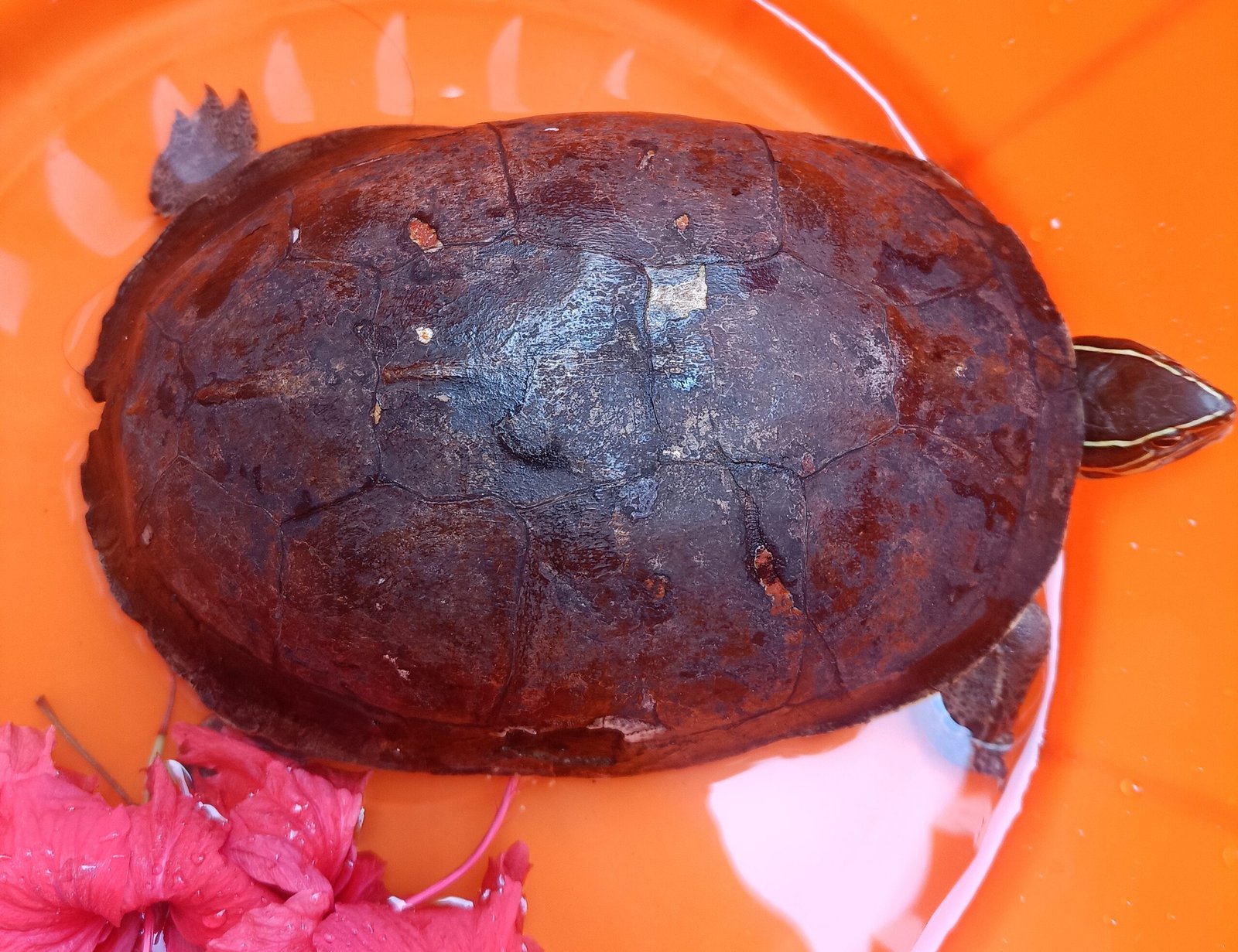 Figure 1. Amboina Box Turtle (Cuora amboinensis) Kept in a Backyard Area at Car Nicobar. (Photo credit: Kiruba Sankar R.)
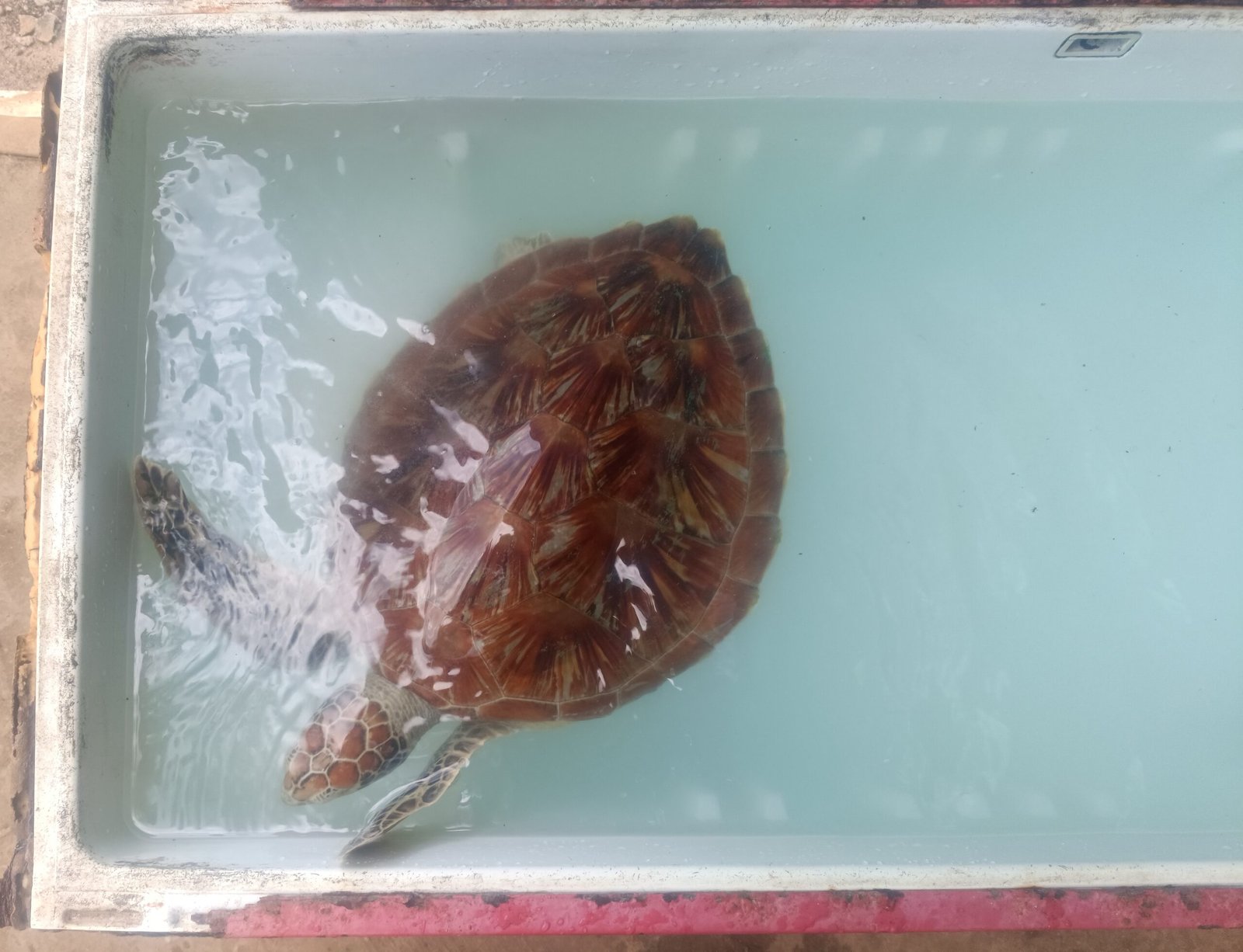 Figure 2. Green Turtle (Chelonia mydas) Kept in a Household at Car Nicobar. (Photo credit: Kiruba Sankar R.)
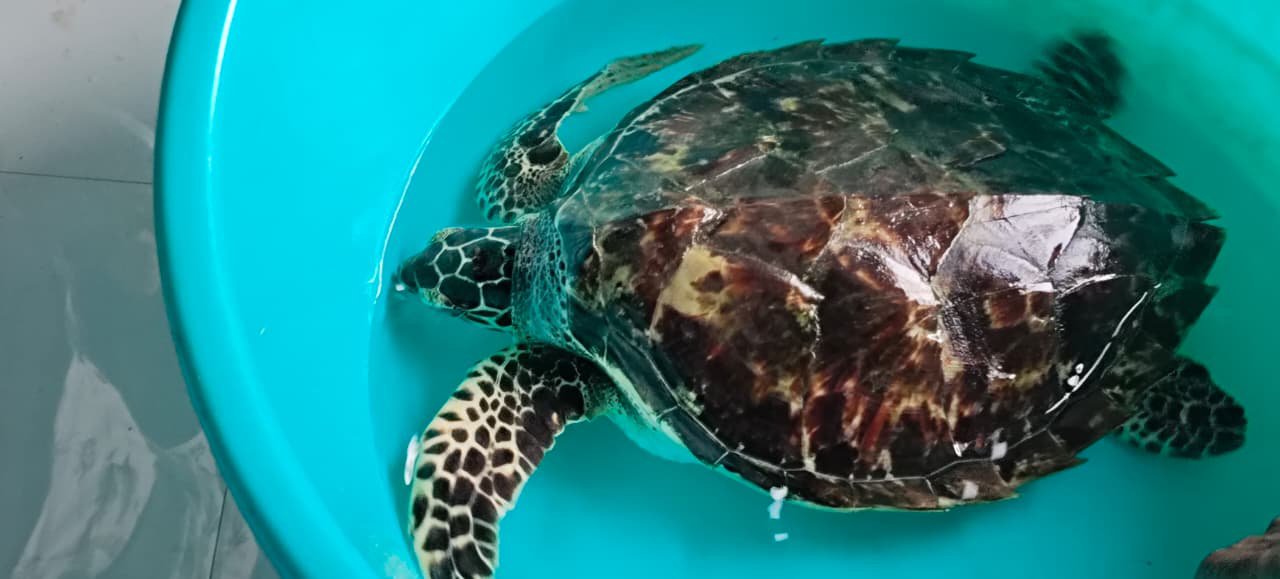 Figure 3. Hawksbill Turtle (Eretmochelys imbricata) Kept in a Backyard Tank at Car Nicobar. (Photo credit: Sonia.)
The household was revisited to collect additional details through discussions with community members and, with their consent, for photographic documentation. The hawksbill turtle was measured by a resource person from the Nicobarese community and found to have a curved carapace length (CCL) in the range of ~33.8cm. The carapace width measured 28.7cm. The head length was 9.9cm, and the head width was 4.3cm. We further enquired about the possible course of action if the turtle grew larger in size or if interest in continued rearing declined; they indicated uncertainty, acknowledging that the chances of releasing them back into the sea would be minimal, as it could potentially serve for their traditional use as well as subsistence needs in future.
These field observations highlight the cultural and ecological connection of the Nicobarese tribes with rich marine biodiversity. Such traditional interactions reflect a long-standing relationship of coexistence and curiosity rooted in their customary dependence on aquatic resources. While these traditional hunting and gathering practices arise from curiosity and coexistence with nature, awareness and education on conservation and sustainable resource management of sea turtles in less-studied areas like Car Nicobar can help channel these interests toward participatory marine stewardship. Understanding and being aware of such practices also provides an opportunity to build a connection between traditional knowledge of the Nicobarese tribes and modern marine conservation understanding. Culturally sensitive educational efforts can further enrich local knowledge while ensuring the long-term well-being of marine biodiversity around Car Nicobar.
Ethics statement
The authors fulfilled the requirements to visit Car Nicobar Island as entry into the Island is restricted under the Protection of Aboriginal Tribes Act, 1956. We also obtained permission from the Chief Captain, Office of the Tribal Council, Car Nicobar, and verbal consent from the respondents before conducting field interactions and surveys. All engagements were carried out respectfully, following local customs and community protocols.
Acknowledgements
The authors express their sincere gratitude to Ms. Tasneem Kauser for her valuable assistance in facilitating interactions with the Nicobarese community of Car Nicobar Island in the local language. This work was undertaken as part of the project “Augmenting Livelihood, Resilience, and Knowledge Generation through Coastal Fisheries Information Hub for Nicobar Tribes of Car Nicobar Island,” funded by the Department of Science and Technology (DST), New Delhi. The authors also acknowledge the guidance and support of the Director, ICAR–Central Island Agricultural Research Institute (CIARI), Sri Vijaya Puram.
Literature cited:
Kiruba-Sankar, R., T. Immanuel, M.P. Goutham-Bharathi & S.D. Roy. 2016. Additions to the opisthobranch fauna of Nicobar group of Islands, India. Indian Journal of Geo-Marine Sciences 45: 319-322.
Kiruba-Sankar, R., K.L. Kumar, J.R.J. Angel, S.S. Salim, K. Saravanan, P. Krishnan, T. Ravikumar, et al. 2020. Impact evaluation of marine fisheries interventions among tribal fisher commune of Car Nicobar Island, India. Journal of Marine Biological Association of India 62: 84-89.
Kiruba-Sankar, R., J. Barman, K. Saravanan, J. Praveenraj, Y. Eswaran, S. Adamala & L. Meshack. 2023. Record of a hawksbill sea turtle at Car Nicobar Island, Andaman and Nicobar archipelago. Indian Ocean Turtle Newsletter 38: 17-19.
Kiruba-Sankar, R., K. Saravanan, J. Praveenraj, Y. Eswaran & A. Soratur. 2024. Release of a hawksbill turtle caught live in a ghost net – An outcome of citizen science initiatives at Car Nicobar, Andaman and Nicobar archipelago. Indian Ocean Turtle Newsletter 40: 8-10.
Ravikumar, T., P. Krishnan, N. Ram, R.K. Sankar, S.D. Roy, S.K.Z. Ahmed & N. Neethiselvan. 2015. Hodi, a traditional craft of Nicobari tribe. Indian Journal of Traditional Knowledge 14: 161-168.
Ravikumar, T., N. Ram, P. Krishnan, R.K. Sankar, V. Sachithanandam & S.D. Roy. 2016. Subsistence fishing methods of Nicobari tribes using traditional knowledge. Journal of Marine and Island Cultures 5: 79-87.