RESCUE AND POST-MORTEM IDENTIFICATION OF SEA TURTLES ON THE SOUTHWEST COAST OF INDIA
ZAINUL ABID P.M., RATHEESH KUMAR R.#, DURGA V., ADITHYA CHANDRA P.B., UTTHAMAPANDIAN U., VISHNU C.B., BALU THARAKAN E.M., KRISHNAPRIYA P.P., ALVIN ANTO & MONOLISHA S.
ICAR- Central Marine Fisheries Research Institute, Kochi, Kerala, India
#rkcmfri@gmail.com
Download article as PDF
Introduction
Sea turtles, as contemporary representatives of an ancient lineage of marine reptiles, offer unique insights into evolutionary history and adaptation. Their ecological roles as grazers, predators, and nutrient transporters make them keystone species vital to the structure and resilience of marine ecosystems (Hamann et al., 2010). Globally, seven species of sea turtles are recognised, of which five occur in Indian waters: olive ridley (Lepidochelys olivacea), green (Chelonia mydas), hawksbill (Eretmochelys imbricata), loggerhead (Caretta caretta), and leatherback (Dermochelys coriacea) turtles (Shanker & Pilcher, 2003). Only three species nest regularly in India. Olive ridley turtles demonstrate synchronised mass nesting events (“arribadas”) in Odisha (Shanker et al., 2004) and the Andaman and Nicobar Islands (Namboothri et al., 2015) and display solitary and sporadic nesting along the coastline of Andhra Pradesh and other states (Tripathy et al., 2003). Green turtles predominantly nest in the state of Gujarat and on some offshore islands (Venkatesan et al., 2004; Sunderraj et al., 2006). Leatherback turtle nesting occurs in the Andaman and Nicobar Islands (Andrews & Shanker, 2002; Swaminathan et al., 2011).
All sea turtles face severe anthropogenic pressures, including bycatch, entanglement in abandoned fishing gear, coastal development, light and other pollution, vessel strikes, and ingestion of marine debris (Fuentes et al., 2023). Turtles that have been injured or killed by any of these threats are often found floating at sea or washed ashore, alive or dead. Accurate species identification of dead turtles is important for effective monitoring and management. Morphological traits such as carapace shape, number of carapace scutes, and number of prefrontal scales are typically used for identification (Wyneken, 2001). However, advanced decomposition and/or external damage can obscure these features. In such cases, molecular tools like mitochondrial cytochrome c oxidase subunit I (COI) barcoding can provide robust species identification and strengthen stranding datasets (Naro-Maciel et al., 2010).
In this study, we report on dead sea turtles from the southwest coast of India and the rescue of a live turtle found entangled in abandoned, lost, or discarded fishing gear (ALDFG) associated with a fish aggregating device (FAD). We employed an integrated approach combining detailed morphometric analyses with DNA barcoding for species identification and confirmation. Furthermore, we document the epibionts on a green turtle and interpret these observations within both biological and ecological contexts.
Methods
Field surveys were conducted along the southwest coast of India from 2024 to 2025 as part of a marine mammal and sea turtle monitoring programme. During this period, three sea turtle encounters were recorded. On 15th October 2024, two olive ridley turtles were encountered: one dead individual (9° 13.9′ N, 76° 17.8′ E) and one live individual entangled in ALDFG (9° 13.9′ N, 76° 17.9′ E). Additionally, one dead green turtle was encountered off Kochi (09° 58.1′ N, 75° 59.2′ E) on 6th May 2025 (Figure 1). Morphological identification for all specimens was based on species-specific diagnostic traits following Pritchard & Mortimer (1999). Standard morphometric measurements were collected from all individuals following the protocols of Bolten (1999). Tissue samples were collected from the front flippers of the dead turtles using sterile scalpels and preserved in 95% ethanol for subsequent DNA extraction and molecular species confirmation.
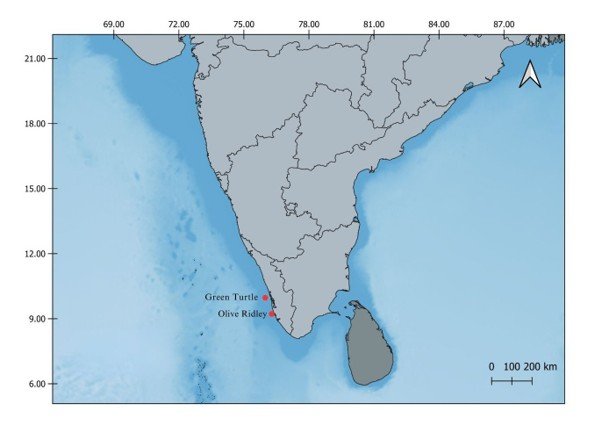 Figure 1. The Location of a Dead Green Turtle and Live and Dead Olive Ridley Turtles Examined in this Study.
Genomic DNA was extracted using the DNeasy Blood and Tissue Kit (Qiagen, Germany; Cat. No. 69504) according to the manufacturer’s instructions. The mitochondrial COI gene, a standard marker for species identification, was amplified using primers: COI-F (5′-TCAACCAACCACAAAGACATTGGCAC-3′) and COI-R (5′-TAGACTTCTGGGTGGCCAAAGAATCA-3′) (Ward et al., 2005). Each polymerase chain reaction (PCR) was performed in a 25μL Maxiamp PCR tube containing EmeraldAmp® GT PCR Master Mix (Takara Bio, Japan), molecular-grade water, the same primer pair, and template DNA. PCR amplification was performed on a SimpliAmp™ thermal cycler (Applied Biosystems, USA) with standard barcoding cycling conditions. Amplified products were separated on a 1.5% agarose gel stained with ethidium bromide (EtBr) and visualised under ultraviolet illumination to verify amplicon size and integrity. Amplified products were purified and directly sequenced using the same primer pairs. The resulting sequences were compared against reference data in GenBank and the Barcode of Life Data Systems (BOLD) using BLASTn to confirm species identity. A maximum likelihood phylogenetic tree was constructed using the Tamura–Nei model with gamma-distributed rate variation (TN93+G). The freshwater turtle Podocnemis unifilis was included as an outgroup to validate tree topology.
Results and Discussion
Morphological examination was used to identify the dead olive ridley and green turtles and the live olive ridley turtle found entangled in a FAD associated with ALDFG. The species of the dead turtle was also confirmed by molecular analysis. The dead green turtle exhibited external epibionts, notably Chelonibia testudinaria.
Morphological characteristics
The morphometric and morphological profiles of the three encountered sea turtles (Table 1) confirmed the species and indicated mature or immature life stages. The curved carapace length (CCL) and curved carapace width (CCW) for the olive ridley turtles fall within the documented sizes for adult populations along the Indian coast, where nesting and migratory adults typically exhibit a mean CCL of 60-70cm (Behera et al., 2016). The size of the dead green turtle indicated a large sub-adult to emerging adult in the Indian Ocean where physiological maturity occurs between 85–90cm (Frazier, 1980; Wyneken, 2001).
Table 1. Morphometric data of live and dead sea turtles.
Curved Carapace Length (CCL), Curved Carapace Width (CCW), Total Body Length (TL), Head Length (HL), Curved Plastron Length (CPL), Curved Plastron Width (CPW), Right/Left (R/L). No data recorded (-)
| Date | Turtle | Live/Dead | CCL (cm) | CCW (cm) | CPL (cm) | CPW (cm) | TL (cm) | HL (cm) | Front Flipper Length (cm) | Back Flipper Length (cm) | # Vertebral Scutes | # Costal Scutes (R/L) | # Marginal Scutes |
| 15th Oct 2024 | Olive Ridley | Dead | 60.0 | 65.5 | 50.0 | 65.0 | 91.0 | 25.5 | 29.0 | 22.0 | 6 | 7/7 | – |
| 15th Oct 2024 | Olive Ridley | Live | 64.0 | 62.0 | – | – | – | 28.0 | 34.0 | – | 8 | -/7 | – |
| 6th May 2025 | Green | Dead | 88.5 | 82.0 | – | – | – | – | – | – | 5 | 4/4 | 25–27 |
Molecular species confirmation
DNA barcoding of the mitochondrial COI gene provided molecular confirmation of morphological species identification, with >99% similarity to reference sequences in GenBank and BOLD. The olive ridley and green turtle sequences were submitted to NCBI under accession numbers PV437215 and PX218923, respectively, and associated barnacle DNA sequences were also deposited (PX219660, PX226007). This congruence between morphology and genetics highlights the potential role for integrative approaches, particularly when decomposition or physical damage may obscure diagnostic traits (Naro-Maciel et al., 2010).
The maximum likelihood phylogenetic tree (Figure 2) constructed under Tamura–Nei model with gamma-distributed rate variation (TN93+G) resolved distinct, well-supported clades for each sea turtle species based on mitochondrial COI sequences. The sequences generated in this study (highlighted in blue) clustered within their respective species groups, confirming accurate molecular identification. Chelonia mydas samples grouped tightly with reference sequences (bootstrap=100), while Lepidochelys olivacea samples also aligned within their corresponding clades with strong support. The freshwater turtle Podocnemis unifilis, included as an outgroup, was clearly separated from marine turtle taxa, validating the tree topology.
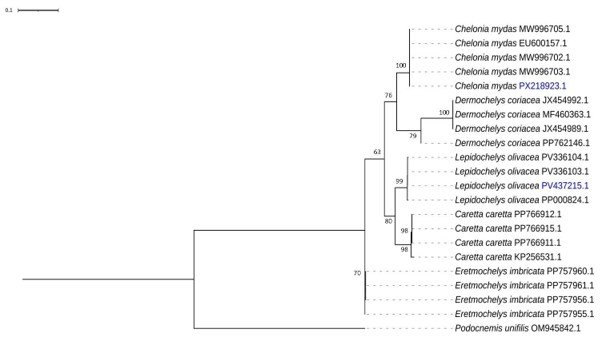 Figure 2. Maximum Likelihood Phylogenetic Tree of Study Sea Turtles Based on Mitochondrial COI Gene Sequences.
Epibiont association and ecological insights
The dead green turtle exhibited a distinct macro-epibiotic settlement, characterised by the attachment of specialised turtle barnacles (Chelonibia testudinaria) across the carapace (Figure 4). C. testudinaria has been documented globally across all seven extant species of sea turtles, though its abundance patterns vary significantly by host species (Zardus & Hadfield, 2004). It is most heavily concentrated on loggerhead turtles (Caretta caretta), whose slower swimming speeds and rough carapaces provide an ideal settlement surface (Frick & Ross, 2001). Carapace colonisation by obligate commensals is widely documented in sea turtles, often serving as a biological indicator of prolonged pelagic residency or a decline in host health before mortality (Frick & Pfaller, 2013). While C. testudinaria settlement is common among healthy foraging populations, excessive macro-epibiont loads can reflect a compromised physiological state. For instance, in loggerhead sea turtles, heavy barnacle infestations are highly prevalent in individuals afflicted by Debilitative Sea Turtle Syndrome (DSTS), where chronic lethargy reduces the host’s natural swimming speed and grooming efficiency, thereby facilitating larval settlement (Baruffaldi et al., 2023). In this study, the presence of these macroscopic bio-indicators on the green turtle carcass provides a critical ecological context. It suggests a period of reduced vitality or a prolonged, slow-moving trajectory, either actively migrating or passively drifting, within coastal or pelagic zones. This finding underscores how epibiotic profiling can enhance our understanding of sea turtle health baselines and mortality factors along the southwest coast of India.
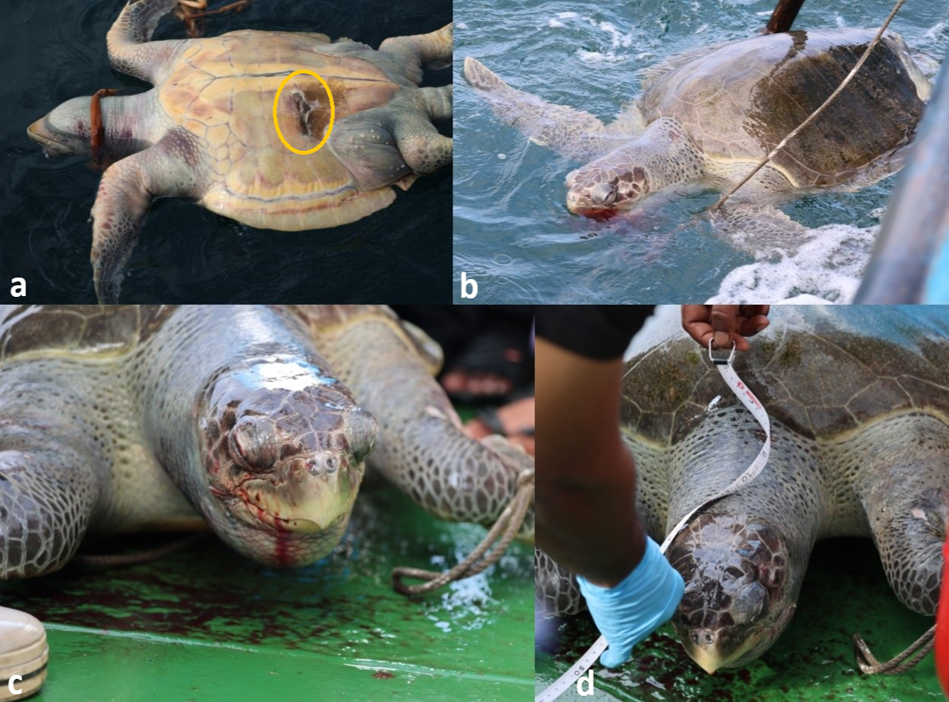 Figure 3. Dead Olive Ridley Turtle from the Southwestern Indian coast. a) Ventral View; Wound Outlined in Yellow. b) Floating Anterolateral View. c) Head, Dorsal Close-up. d) Measuring Turtle on Vessel Deck. (Photo credit: Vishnu C.B.)
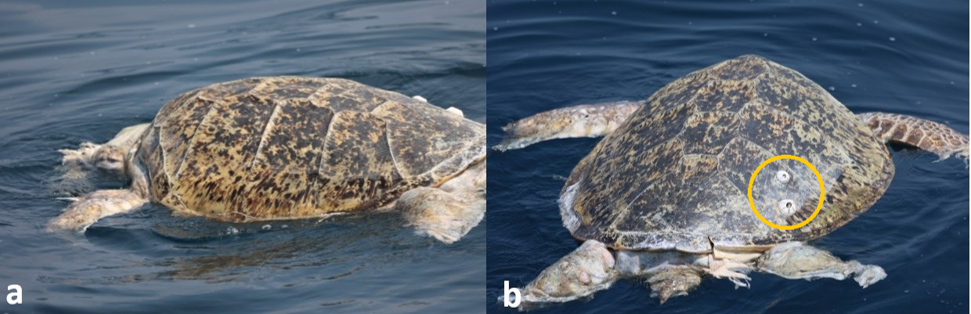 Figure 4. Dead Green Turtle from the Southwestern Indian coast. a) Lateral View of the Carapace. b) Posterolateral View with Two Macro-epibiotic Turtle Barnacles (Chelonibia testudinaria) Circled in Yellow. (Photo credit: Krishnapriya P.P.)
Entanglement in ALDFG
The active entanglement event and subsequent rescue of the live olive ridley turtle documented in this study is an example of the threat posed by FADs and ALDFG to sea turtles in Indian coastal waters. Modern synthetic netting materials resist degradation and can persist as marine pollution for years to decades, resulting in prolonged “ghost fishing” dynamics that continually entrap non-target marine wildlife (Thomas et al., 2023; Zainul et al., 2025). Along the southwest coast of India, including states like Kerala, traditional artisanal fishers frequently deploy specialised, floating FADs to target cuttlefish. These configurations typically utilise inverted, biodegradable coconut spadices (fronds) to provide attractive, natural egg-laying substrates for cephalopods (Figure 5). However, to maximise efficiency, fishers often fix synthetic monofilament or gillnets directly around these organic structures. While the core FAD components are biodegradable, these units can aggregate lost netting and synthetic marine debris over time. The combination of floating organic material and highly entangling synthetic mesh creates a cryptic, lethal hazard for marine megafauna; it is highly plausible that the live olive ridley rescued during this monitoring period became entrapped within such a setup, a critical interaction that would have inevitably resulted in mortality without immediate human intervention. Managing ALDFG requires targeted, gear-specific conservation interventions and community-led ghost net mitigation frameworks.
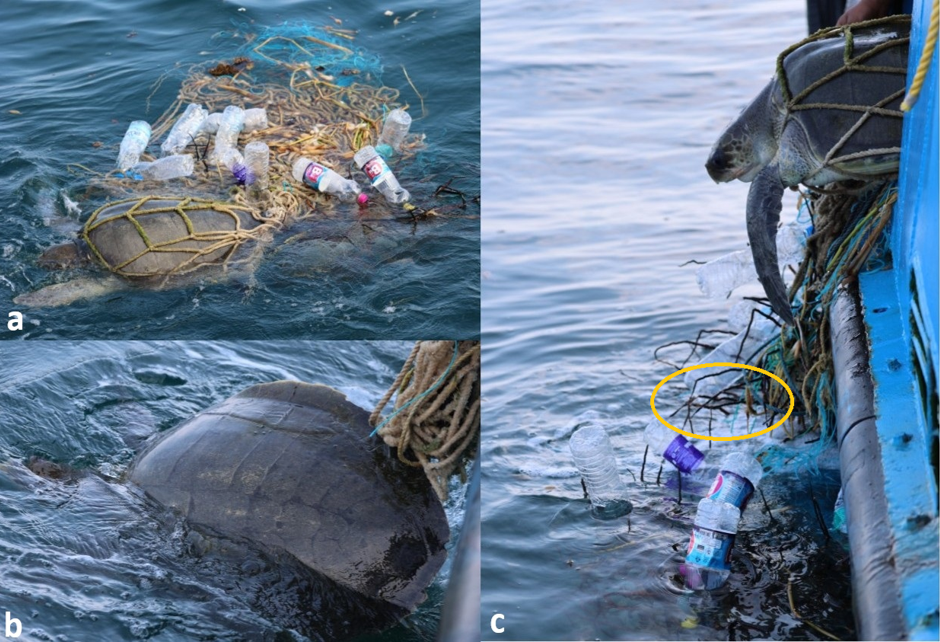 Figure 5. Rescue of an Olive Ridley Turtle. a) Entangled in ALDFG Comprising Synthetic Netting, Structural Ropes, and Floating Plastic Bottles. b) Post-release Swimming Behaviour. c) FAD, the Coconut Spadices (Outlined in Yellow). (Photo credit: Zainul Abid P.M.)
Conclusion
This study documents dead olive ridley and green sea turtles along India’s southwestern coast, using a reliable combination of morphometrics and morphological characteristics combined with DNA barcoding to confirm species identity. Incorporating these molecular methods makes regional wildlife monitoring more accurate when decomposition or physical injury makes it hard to identify a turtle species by its external features alone. Additionally, documenting entanglement in ALDFG highlights the human pressures these animals face in Indian waters. Our study demonstrates the information that could be collected by a long-term monitoring and stranding network on the Kerala coast.
Acknowledgments
The authors express their sincere gratitude to the Fishery Survey of India, Department of Fisheries, Ministry of Fisheries, Animal Husbandry and Dairying, Government of India, for providing funding support (Project No. 1014351). We are also grateful to the Director, ICAR–Central Marine Fisheries Research Institute (CMFRI), for extending institutional support and encouragement throughout the study. We deeply appreciate the dedicated efforts of the FV Silver Pompano vessel crew during the survey operations.
Literature cited:
Andrews, H. & K. Shanker. 2022. A significant population of leatherback turtles in the Indian Ocean. Kachhapa 6: 19.
Baruffaldi, M., S. Rubini, S. Ignoto, V. Angelini & F. Tiralongo. 2023. Learning from Caretta caretta (Linnaeus, 1758) epibionts: A study from the Adriatic Sea. Frontiers in Marine Science 10: 1243153. DOI: 10.3389/fmars.2023.1243153.
Behera, S., B. Tripathy, K. Sivakumar, B.C. Choudhury & B. Pandav. 2016. Fisheries impact on breeding of olive ridley turtles (Lepidochelys olivacea) along the Gahirmatha coast, Bay of Bengal, Odisha, India. The Herpetological Journal 26: 93-98.
Bolten, A.B. 1999. Techniques for measuring sea turtles. In: Research and Management Techniques for the Conservation of Sea Turtles (eds. Eckert, K.L., K.A. Bjorndal, F.A. Abreu-Grobois & M. Donnelly). Pp. 110-114. IUCN/SSC Marine Turtle Specialist Group Publication No. 4.
Frazier, J. 1980. Exploitation of marine turtles in the Indian Ocean. Human Ecology 8: 329-370.
Frick, M.G. & A. Ross. 2001. Will the real Chelonibia testudinaria please come forward: an appeal. Marine Turtle Newsletter 94: 16-17.
Frick, M.G. & J.B. Pfaller. 2013. Sea turtle epibiosis. In: The Biology of Sea Turtles Volume III (eds. Wyneken, J., K.L. Lohmann & J.A. Musick). Pp. 399-414. CRC Press: Boca Raton, USA.
Fuentes, M.M.P.B., E. McMichael, C.Y. Kot, I. Silver-Gorges, B.P. Wallace, B.J. Godley, G.C. Hays, et al. 2023. Key issues in assessing threats to sea turtles: Knowledge gaps and future directions. Endangered Species Research 52: 303-341.
Hamann, M., M.H. Godfrey, J.A. Seminoff, K. Arthur, P.C.R. Barata, K.A. Bjorndal, B.J. Godley, et al. 2010. Global research priorities for sea turtles: Informing management and conservation in the 21st century. Endangered Species Research 11: 245-269.
Namboothri, N., A. Swaminathan & K. Shanker. 2015. Olive ridley mass-nesting at Cuthbert Bay wildlife sanctuary, Middle Andaman Island. Indian Ocean Turtle Newsletter 21: 7-9.
Naro‐Maciel, E., B. Reid, N.N. Fitzsimmons, M. Le, R. Desalle & G. Amato. 2010. DNA barcodes for globally threatened marine turtles: A registry approach to documenting biodiversity. Molecular Ecology Resources 10: 252-263.
Pritchard, P.C. & J.A. Mortimer. 1999. Taxonomy, external morphology and species identification. In: Research and Management Techniques for the Conservation of Sea Turtles (eds. Eckert, K.L., K.A. Bjorndal, F.A. Abreu-Grobois & M. Donnelly). Pp. 21-38. IUCN/SSC Marine Turtle Specialist Group Publication No. 4.
Shanker, K. & N.J. Pilcher. 2003. Marine turtle conservation in South and Southeast Asia: Hopeless cause or cause for hope. Marine Turtle Newsletter 100: 43-51.
Shanker, K., B. Pandav & B.C. Choudhury. 2004. An assessment of the olive ridley turtle (Lepidochelys olivacea) nesting population in Orissa, India. Biological Conservation 115: 149-160.
Sunderraj, S.F.W, J. Joshua & V.V. Kumar. 2006. Sea turtles and their nesting habitats in Gujarat. In: Marine Turtles of the Indian Subcontinent (eds. Shanker, K. & B.C. Choudhury). Pp. 156-169. Universities Press: Hyderabad, India.
Swaminathan, A., N. Namboothri & K. Shanker. 2011. Post-tsunami status of leatherback turtles on Little Andaman Island. Indian Ocean Turtle Newsletter 14: 5-9.
Thomas, S.N., S.K. Mandhir, H. Krishnankutty, M. Baby K.A. & A. Ghosh K.A. 2023. Ghost fishing capacity of lost experimental gillnets: A preliminary study from Indian waters. Environmental Science and Pollution Research 30: 40062-40072.
Tripathy, B., K. Shanker & B.C. Choudhury. 2003. Important nesting habitats of olive ridley turtles Lepidochelys olivacea along the Andhra Pradesh coast of eastern India. Oryx 37: 454-463.
Venkatesan, S., P. Kannan, M. Rajagopalan & E. Vivekanandan. 2004. Nesting ecology of the green sea turtle Chelonia mydas along the Saurashtra coast. Journal of the Marine Biological Association of India 46: 169-177.
Ward, R.D., T.S. Zemlak, B.H. Innes, P.R. Last & P.D. Hebert. 2005. DNA barcoding Australia’s fish species. Philosophical Transactions of the Royal Society B: Biological Sciences 360: 1847-1857.
Wyneken, J. 2001. The Anatomy of Sea Turtles. U.S. Department of Commerce NOAA Technical Memorandum NMFS-SEFSC-470. 172 p.
Zainul Abid, P.M., U. Utthamapandian, C.B. Vishnu, A. Anto & R. Ratheesh Kumar. 2025. Rescue of two sea turtles from abandoned, lost, or otherwise discarded fishing gear during survey of the southeast coast of India. Indian Ocean Turtle Newsletter 41: 10-11.
Zardus, J.D. & M.G. Hadfield. 2004. Larval development and complemental males in Chelonibia testudinaria, a barnacle commensal with sea turtles. Journal of Crustacean Biology 24: 409-421.