SSTCN TURTLE DIARY OF 2026
V. ARUN & AKILA B.
Students’ Sea Turtle Conservation Network (SSTCN)
sstcnchennai@gmail.com
Download article as PDF
Introduction
The 2025 nesting year was quite a landmark season in many ways. We registered the highest number of stranded dead turtles in SSTCN’s and, therefore, Chennai’s history. The Forest Department swung into action and reactivated the Nodal Task Force. The task force met frequently and every potential department of the Government was pressed into action. The Fisheries Department came under close scrutiny to take action against trawlers breaking the law by fishing in illegal waters. The Coast Guard was pulled in to monitor the trawlers. The Forest Department acquired two boats of their own to monitor the coast. The Coastal Security team was invited to be a part of ensuring safety for turtles. The Forest Department, along with the Fisheries Department, initiated awareness and education camps, known as Sagar Mitra, in all fishing villages, particularly engaging with the women-led groups. This programme continued through the season and after as well.
SSTCN Preparation for 2026
In all, there was a feeling of readiness for this year’s turtle season. We started the season with the Nodal Task Force meeting to run through checklists and make sure that all departments were in readiness for the contingencies of the season. SSTCN started monitoring the beaches with night walks on 15th December 2025. We were able to walk only the Neelangarai -Besant Nagar stretch of the local coastline due to limited volunteers and not having police permissions at the start of the season. One of our most senior and committed volunteers, Nambirajan, began the night walks and straight away noted dead stranded turtles in high numbers. For instance, he recorded nine dead turtles on 17th December alone. Even before the first nest was found on 4th January 2026, we had recorded more than 125 strandings on these beaches. It was quite a shock to us, as we were expecting low mortality given the amount of work done in the previous season.
Due to finding nests early in the season and not having enough volunteers on call, we decided to start public walks early on 16th January 2026. However, we began to regret this decision with the number of strandings remaining steadily high. On 20th January, we recorded 20 dead turtles on the beaches and another 14 on the 21st January, with five more dead turtles floating in the water. A dwarf sperm whale also washed up dead, and was spotted by our volunteers on a weekday walk.
As we began to despair, we seemed to turn a corner on the 23rd January. The number of nests began to rise. The dead turtles kept stranding but with us getting busy with nest collection, the presence of dead turtles was not as daunting. We ended January with a count of 58 nests. Unfortunately, our dead turtle count exceeded 300.
Tagging Turtles
This year a decision was taken to satellite tag 10 turtles and flipper tag 100 turtles. This was initiated by Ms. Supriya Sahu, Environment Secretary of the Tamil Nadu Government, and carried out under the guidance of Dr. Suresh Kumar of the Wildlife Institute of India (WII). Mr. Mohit from WII was initially responsible for the programme. He recruited local people to help him monitor the beaches and worked closely with us to locate nesting turtles to fix the satellite tags to (Figure 1).
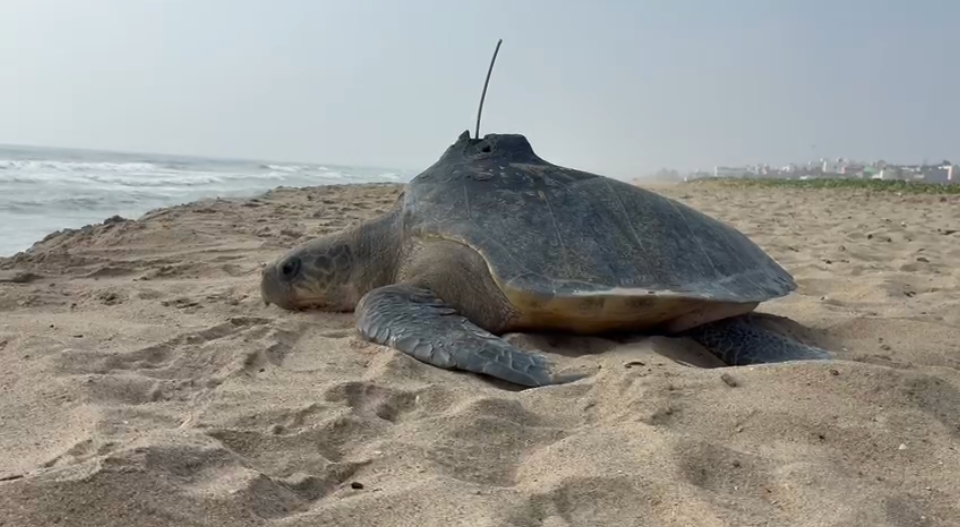 Figure 1. Olive Ridley Turtle, with Satellite Transmitter and Flipper Tag Applied by WII, Returning to the Sea After Nesting. Photo credit: Shravan Krishnan.
After flipper tagging 16 turtles, Mr Mohit left to continue the work in other sites and Mr. Anoop Sabu took over. He and his team walked several kilometres every night, particularly near the estuary, to monitor and tag nesting turtles. This brought a new aspect to our walks. The week-day walkers had someone to look forward to meeting and had to keep their eyes keenly open, look for potential nesters, and give a heads-up to the WII team to flipper tag and/or satellite tag the turtle after it finished nesting. Those involved in the public walks had the assurance of a nest waiting for them somewhere, as Mr. Anoop or his team would have located the nest, perhaps tagged the turtle, and often left the nest for us to collect. It was really nice for us to walk with this assurance and also to have the company of others on the beach who felt and acted like us. Suddenly we didn’t feel alone anymore.
Working in Collaboration with the Forest Department
After being together for so many years, we have a reasonably smooth working relationship with the Forest Department staff. Like in the earlier years, the DFO Mr. Manish Meena gave instructions to the staff to walk the beaches on the second part of the night, after we walked the first part of the night, to ensure that the whole night was covered between the two agencies.
The turtle conservation work is taken very seriously by senior personnel in the department. Higher level officers like Mr. Rakesh Kumar Dogra (PCCF and Chief Wildlife Warden) and Mr. Srinivas Reddy (HOFF) visit the hatchery regularly and Ms. Supriya Sahu Ma’am has always taken great interest and has been fully involved in the whole project.
Beach Cleaning Equipment
We ran into trouble for a while with new beach cleaning vehicles which were introduced to scour the local beaches and free the sand from plastic and other waste. These vehicles would completely erase all tracks of turtles and there was no way we were going to find a nest on sand which these vehicles had done the cleaning.
We brought it to the notice of the Corporation commissioner who readily understood the issue. But to make sure that all the staff became aware and to ensure that they did not use these vehicles up to 50 metres from the high tide line took some coordinated effort.
Working with Other NGOs
With the growth of social media, turtle walks have become immensely popular. From the very start of the season, we received far more requests than we were able to handle in the short season available to us. Overall, there were 10 weekends of walks, 20 nights in all, during the season. Taking more than 50 people during each walk makes the experience less than desirable for all concerned so we are able to cater to only around a thousand people per season. As an organisation committed to conservation and education, our primary targets for the walks are school and college students and other young people interested in nature.
However, there was a whole new group who was keen to walk and they are the corporate entities wanting to organise walks for their employees. We just didn’t have the space for such engagements. In the last couple of seasons, another organisation has stepped in to fill this void: Save a Turtle (SaT). They conduct walks on the Marina beach stretch with the help of the Forest Department staff. So public walks were happening in unison on two stretches of coast on the same nights.
At the Hatchery
While conducting two walks simultaneously works pretty smoothly, there is only one hatchery and one hatchling release programme. A public release of hatchlings is only possible in the evenings and on days that hatchlings emerge from their nests in the late afternoon.
In the past season we had some crazy evenings with 500 to 600 people coming to the hatchery to witness the hatchlings being released. This year, we worked out a deal among ourselves, restricting or rather trying to restrict the number of visitors to 100 between two groups. This allowed for some level of control during the release. It was definitely better managed than other years.
Ant Problem
Little red ants consistently invaded the hatchery in March and April of 2026. Volunteers sprinkled Neem cake powder and turmeric powder generously in the hatchery, but it was quite a struggle to keep the ants from biting emerging hatchlings. In spite of constant vigilance, we did lose a hatchling now and then to these ants. Fortunately, as the heat intensified after mid-April, the ants upped and left.
Total Nest Count, Unexpected Heavy Rains, and Loss of Eggs
We ended the season with 340 nests in all. We found 58 nests in January, 136 nests in February, 147 nests in March and one in April 2026. We had significant rains on 26th January, 18th March, and again on 6th April 2026, leading to inundation of water into many of the nests. Around 32% of the eggs that we collected did not hatch. When excavating the nests, our assessment was that approximately 15% of the eggs showed no signs of embryo development and 17% had embryos that did not survive to hatch. This means that of the total 38,358 eggs collected from 340 nests, 12,297 eggs showed no evidence of embryo development. Of the 26,061 remaining eggs, only 22,133 hatchlings emerged. More than 100 hatchlings also emerged from nests that we found during patrolling but did not move to the hatchery.
The daytime temperature (11am to 4pm) outside the hatchery between 11th March and 11th April 2026 averaged 39.5°C while the temperature inside the hatchery was at least one degree higher. We have shaded the hatchery with shade cloth or jute since 2005 to prevent direct exposure of nests to the sun and reduce overheating, but this prevents the sea breeze from cooling the inside of the hatchery. We need to reconsider this design next season.
The majority of turtle nesting is usually in February but this year the highest number was in March. This meant that the majority of the hatchlings emerged in April and May. As it got hotter and wetter in these months, embryo survival dropped dramatically. The initial survival rate at the start of the season for eggs collected in January and February was >75%. Average hatching success for the last 40 nests, collected in March, was <19%. The overall hatching success was just 56% this season, our lowest in the last 20 years.
The last public walk for 2026 was on 27th March 2026. The last big release of hatchlings was on 30th March, with 456 hatchlings being released. The last hatchling release was on 20th May 2026.
The Red Headed Centipede
Scolopendra morsitans, also known as the Tanzanian blue ringleg, was found in the hatchery this year, as it has been found in the past (Figure 2). The species grows to around 13cm. It is found across all continents and is highly invasive. The centipede is an opportunistic predator which hunts primarily at night and feeds on other arthropods and some small vertebrates, using its neurotoxic venom and its strong jaws. We have not seen the centipedes injure hatchlings.
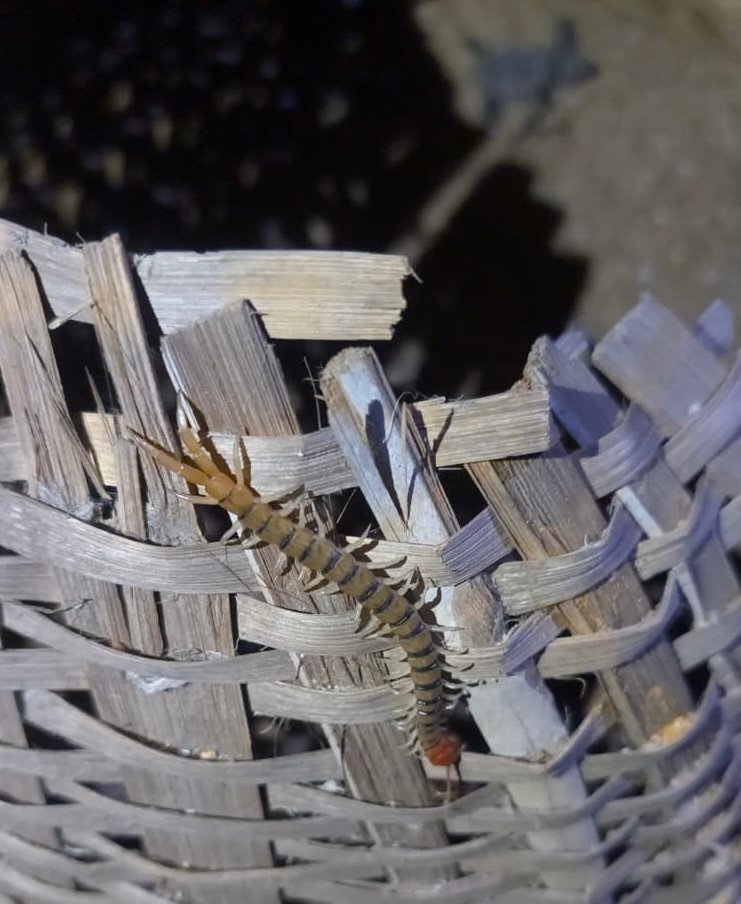 Figure 2. Red-headed Centipede in the Hatchery. Photo credit: Adhith Swaminathan.
Special Moments
A juvenile hawksbill turtle (Figure 3) was brought to the Forest Department in early January, and Besant Memorial Animal Dispensary (BMAD) took responsibility for its care. The turtle was in critical condition, suffering from floating syndrome. This usually happens when air is stuck in the gastrointestinal tract, often after swallowing a foreign body. It was thought to have been caught in a fishing net and then thrown back into the sea. The turtle was unable to dive due to the floating syndrome, and had to be treated for over three months. During this time, it defecated some fishing line (Figure 4). The turtle was released into the Gulf of Mannar on 9th April 2026 with a lot of fanfare.
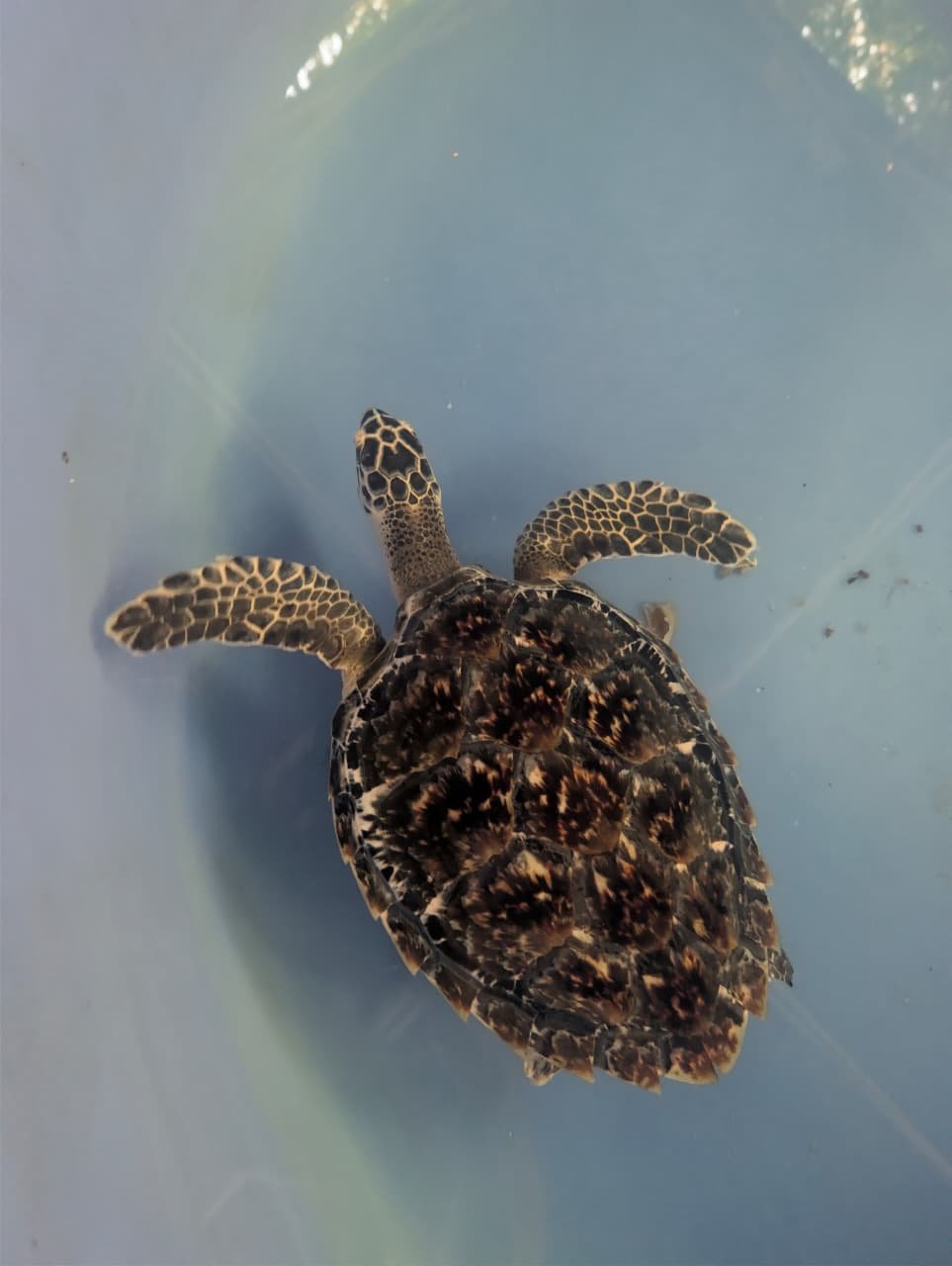 Figure 3. Juvenile Hawksbill Turtle with Floating Syndrome that was Treated at Besant Memorial Animal Dispensary. Photo credit: Adhith Swaminathan.
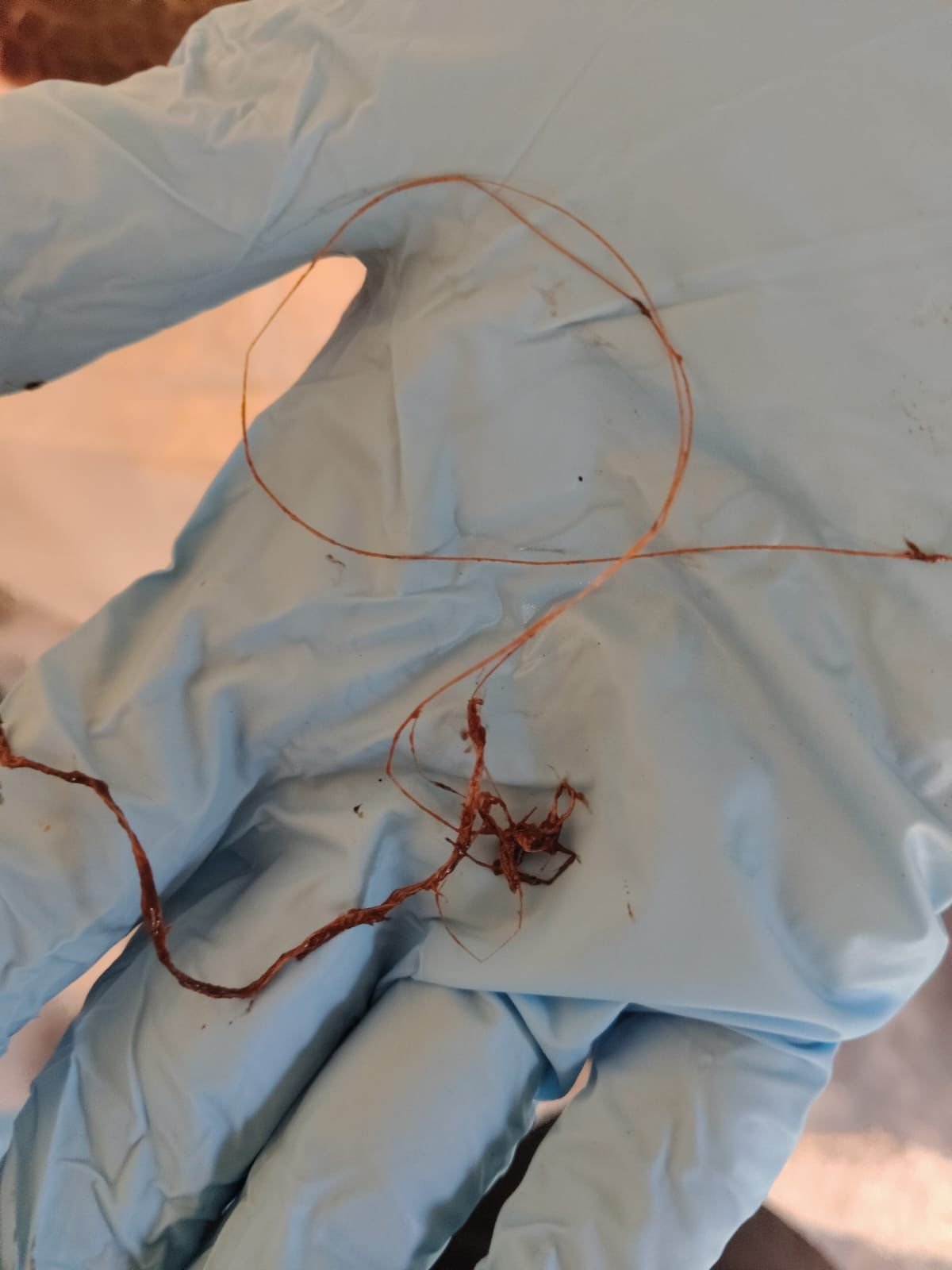 Figure 4. Fishing Line that had been Swallowed by the Floating Juvenile Hawksbill. Photo credit: Shravan Krishnan.
An adult olive ridley turtle was brought in with a hook in its jaw (Figure 5). The hook was surgically removed by a team of doctors from the Government veterinary college in BMAD and the turtle was safely released. A special thanks to Mr. Shravan Krishnan and his team for their commendable work in treating injured turtles and enabling their safe release back to the sea.
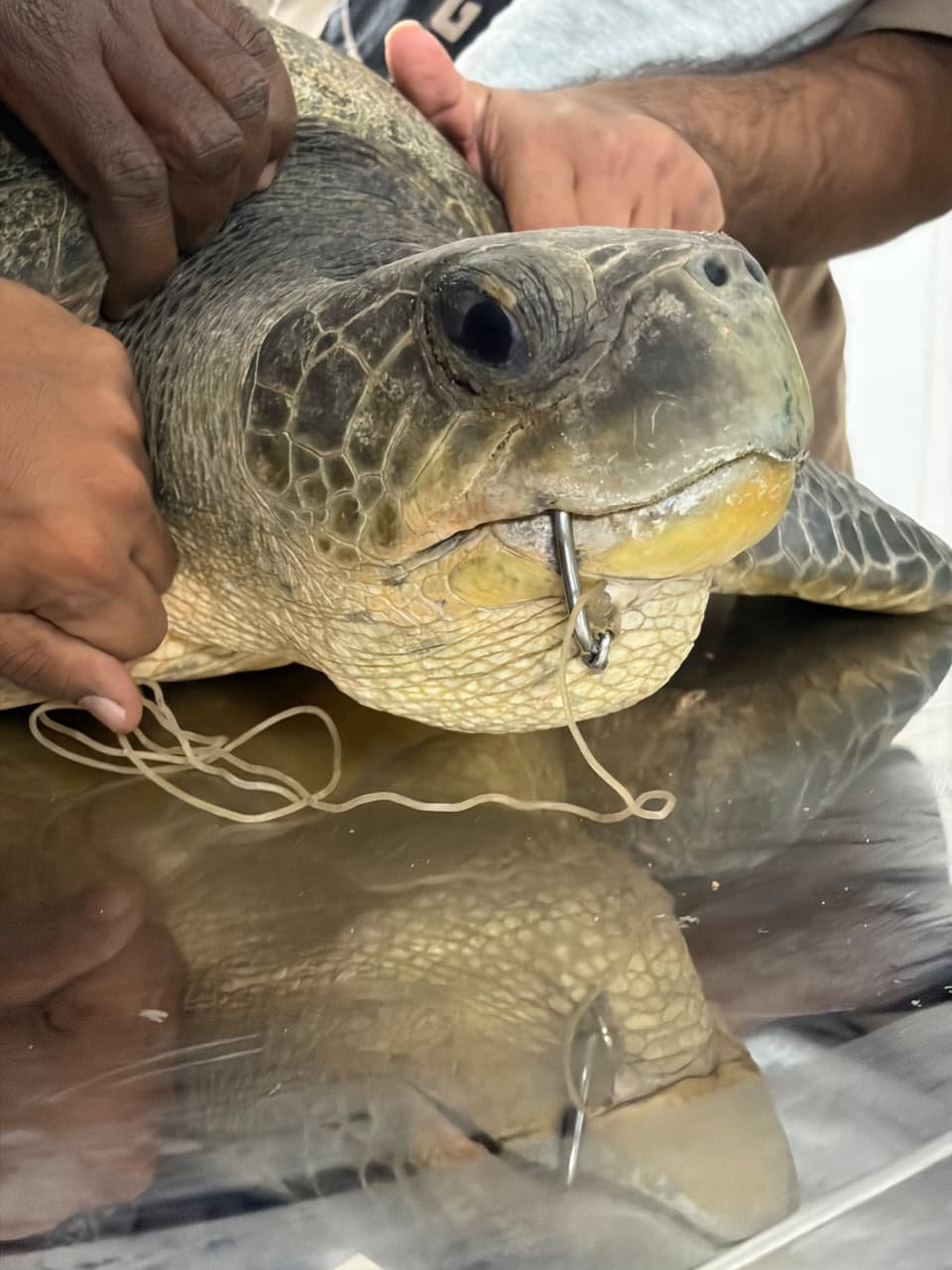 Figure 5. Adult Olive Ridley Turtle with a Hook in its Jaw that was Treated at Besant Memorial Animal Dispensary. Photo credit: Shravan Krishnan.
Mr. Anoop and our volunteers kept coming across a turtle which would come ashore but couldn’t dig a nest. It seemed like her left hind flipper wasn’t functioning properly, though there was no visible injury. After she had tried digging a pit unsuccessfully seven or eight times over a couple of weeks, she was taken to BMAD. They didn’t find any injury, just general weakness. It was felt that holding her in the clinic would be detrimental as she was full with eggs and she was released into the sea. After 11 or so attempts she seemed to have stopped coming ashore. She might have released the eggs in the sea itself.
Press Lowkey
The print news press who had raised the issue of dead turtles quite strongly last year barely addressed the issue this year. They got quite caught up in the turtle tagging story and were content to cover it as positive news. The number of dead turtles this year was still very high, though a little lower than last year. We recorded more than 750 dead this year compared to 1,197 last year.
Woes of the Season
Being situated in Chennai, the hatchery receives a lot of attention from Government officials. This is a mixed blessing. It is good for creating awareness about the turtles. On the other hand, many of these officers came with their families and friends who the Forest Department staff felt compelled to allow inside the hatchery. This was a big problem as there was the issue of nest marking sticks being knocked down and a bigger danger of handling hatchlings. Also, the public were upset that they were asked to stay out of the hatchery, citing the safety of hatchlings, while family members of Government officials were being allowed to handle hatchlings. Most officers were understanding of the situation, but the Forest Department staff were reluctant to address the issue with their higher-ups. This left the SSTCN volunteers in the awkward situation of having to address this with the officers and their families.
Save a Turtle was very active on Instagram and were actively inviting people to come and witness the release of hatchlings. This became quite a catch phrase – “Baby turtle farewell”. There were two issues with this. One was the handling of crowds, which we managed somewhat with constant negotiation with members of SaT. The bigger issue was that our volunteers felt that SSTCN was not recognised for the work as only SaT was visible on social media. While it was a conscious decision on SSTCN’s part to maintain a low profile, the angst it caused our volunteers was quite draining.
Quite a few nesting turtles were attacked by feral dogs and this was extremely distressing. We need a mass sterilisation programme for stray dogs in the area, especially on the beaches. While we are able to sterilise the dogs near the hatchery area in Uroor Kuppam every year by befriending them, this process is very slow and we’re unable to do it for the entire 14km stretch of coastline. Many of us walkers love animals, including dogs. Our walks are in the company of a number of friendly dogs. But we recognise the larger issue of the beach needing to be safe for turtles. The problem needs to be addressed on several levels. The food waste left behind by people is one of the key factors which causes a burgeoning rise in the stray dog population. The turtle walks in Chennai are more than five decades old and have gained a cult status in many ways. Unfortunately, this has not resulted in bringing about a sense of civic consciousness in people to, at the very least, keep the beaches clean and safe for turtles. We rue this very much and recognise it as a failure on our part as the custodians of turtles.
One of upshots of the Instagram popularity is that groups of people were found roaming the beaches on self-appointed “turtle walks” looking for turtles to shoot videos of and gain Instagram fame. It was very amusing to sometimes come across groups of people walking in the opposite direction ‘looking for turtle nests’.
Conclusion
In all, the season was a very mixed one for SSTCN volunteers (Figure 6). Purely in terms of mortality of turtles, it was a season we would not want to remember. We hope for a better season next year. We are losing our resilience to face turtle deaths in such numbers. It has nearly broken our spirit to face such dire situations over two consecutive years. This despite the best efforts by the Government through the Forest Department and the Environment secretary. We intend to do as much outreach as possible to schools and colleges during the off season to address the larger issues of the beach and ocean ecosystem as a whole.
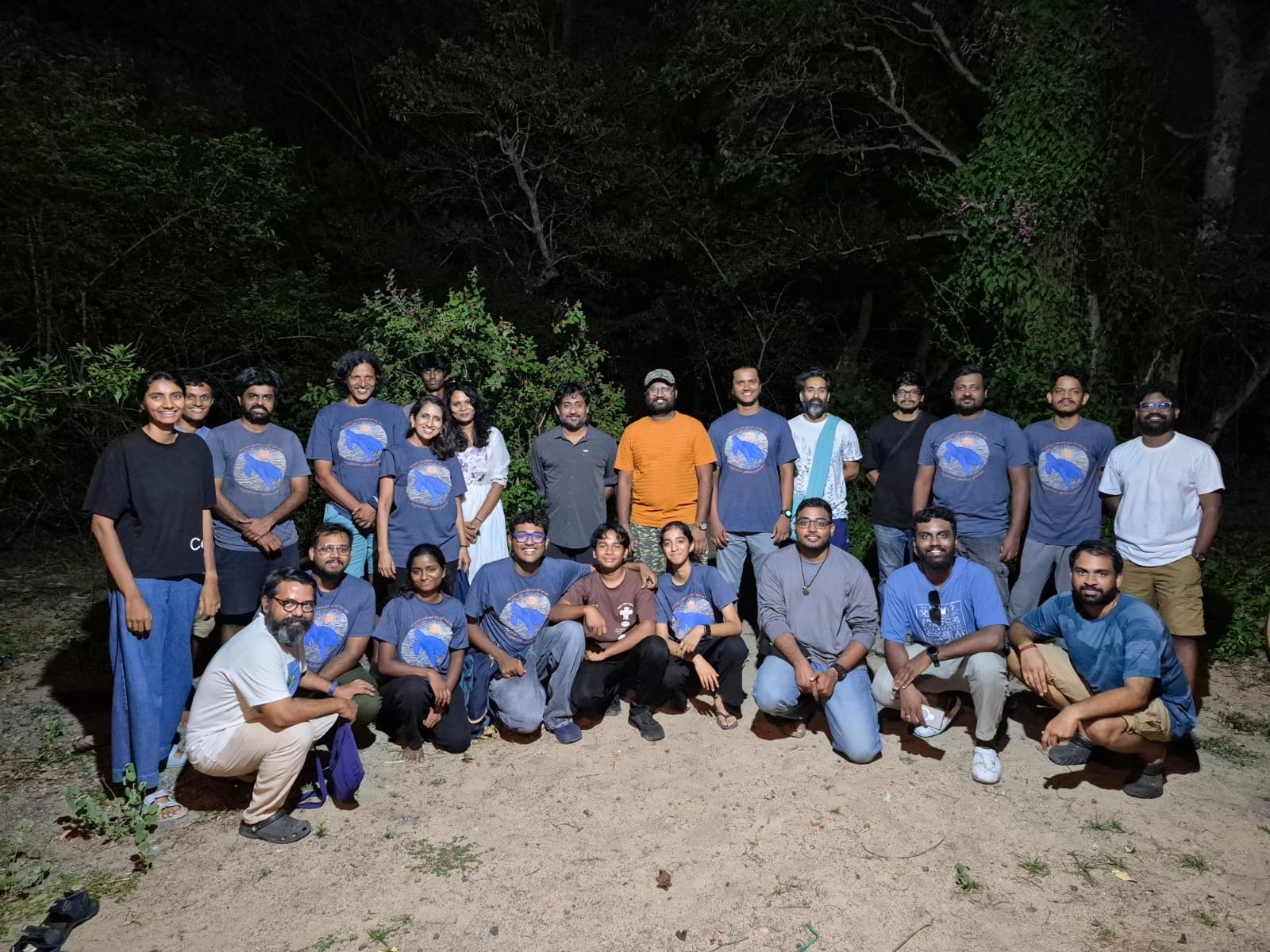 Figure 6. Some of the SSTCN Long-term Members and Newcomers. Photo credit: SSTCN