REDISCOVERY OF THE LEATHERBACK SEA TURTLE AT KADMAT ISLAND, LAKSHADWEEP ARCHIPELAGO, INDIA
P.A. HABEEBU RAHMAN1,#, AYSHA SUHAILA P.K.P.2 & K.K. IDREESBABU3
1Research and Environmental Education Foundation (REEF), Agatti Island, Lakshadweep, India
2Department of Environment and Forest, Lakshadweep, India
3Department of Science and Technology, Kavaratti Island, Lakshadweep, India
#habeeburahmankdt@gmail.com
Download article as PDF
The Lakshadweep Archipelago is a chain of low-lying atolls in the northern Indian Ocean, comprising 12 coral atolls enclosing 27 small islands. This geographical positioning makes it a potentially important habitat and migratory corridor for sea turtles (Tripathy et al., 2002). The first documented sea turtle survey in this region was conducted in 1976 (Bhaskar, 1978, 1979). Subsequent investigations by the Central Marine Fisheries Research Institute (CMFRI) (Silas, 1984; Lal Mohan, 1989) and later by Tripathy et al. (2006) reported four out of the seven globally recorded sea turtle species in the region. Among these, three species — the green (Chelonia mydas), olive ridley (Lepidochelys olivacea), and hawksbill (Eretmochelys imbricata) turtles — are the most common and are known to forage or nest in the islands. In contrast, there is limited and inconclusive evidence regarding the occurrence of the leatherback sea turtle (Dermochelys coriacea) in Lakshadweep, and not much known about its nesting in the region.
The leatherback sea turtle is the largest extant marine turtle and is easily distinguishable by its large body size and leathery carapace. It is widely distributed across tropical and temperate oceans and exhibits extensive migratory behaviour. In India, its major nesting populations are primarily confined to the Andaman and Nicobar Islands, particularly Great and Little Nicobar Islands and Little Andaman Island (Andrews & Shankar, 2002; Andrews et al., 2006). Recent systematic marine biodiversity assessments and turtle monitoring programmes in the Lakshadweep Archipelago (Shankar et al., 2024) have not documented the presence of leatherback turtles, rendering it effectively absent from contemporary regional records. However, historical accounts and indigenous ecological knowledge indicate that the species, locally known as “lasar mulla,” was occasionally encountered by fishers and only rarely came ashore for nesting (Bhaskar, 1978). Earlier systematic surveys by Tripathy et al. (2002, 2006), based on secondary data, reported that only a small proportion of fishers mentioned sightings or nesting events, but these accounts lacked verifiable scientific evidence. In this context, the present sighting of a leatherback sea turtle from the coastal waters of Kadmat Island represents a rare and scientifically significant record for the Lakshadweep Archipelago.
Kadmat island is 8km long and 550m wide, with a lagoon covering a total area of 20.9km². On 29th April 2026, at 13:30 h, crew members of the fishing craft Amina Beebi (IND-LD-KD-MO-452) sighted a single leatherback sea turtle ~0.44nm offshore on the southeastern (11.177° N, 72.768° E) side of the island (Figure 1). The individual was observed in a surface-basking state and had an estimated carapace length of ~1.5m (Figure 2).
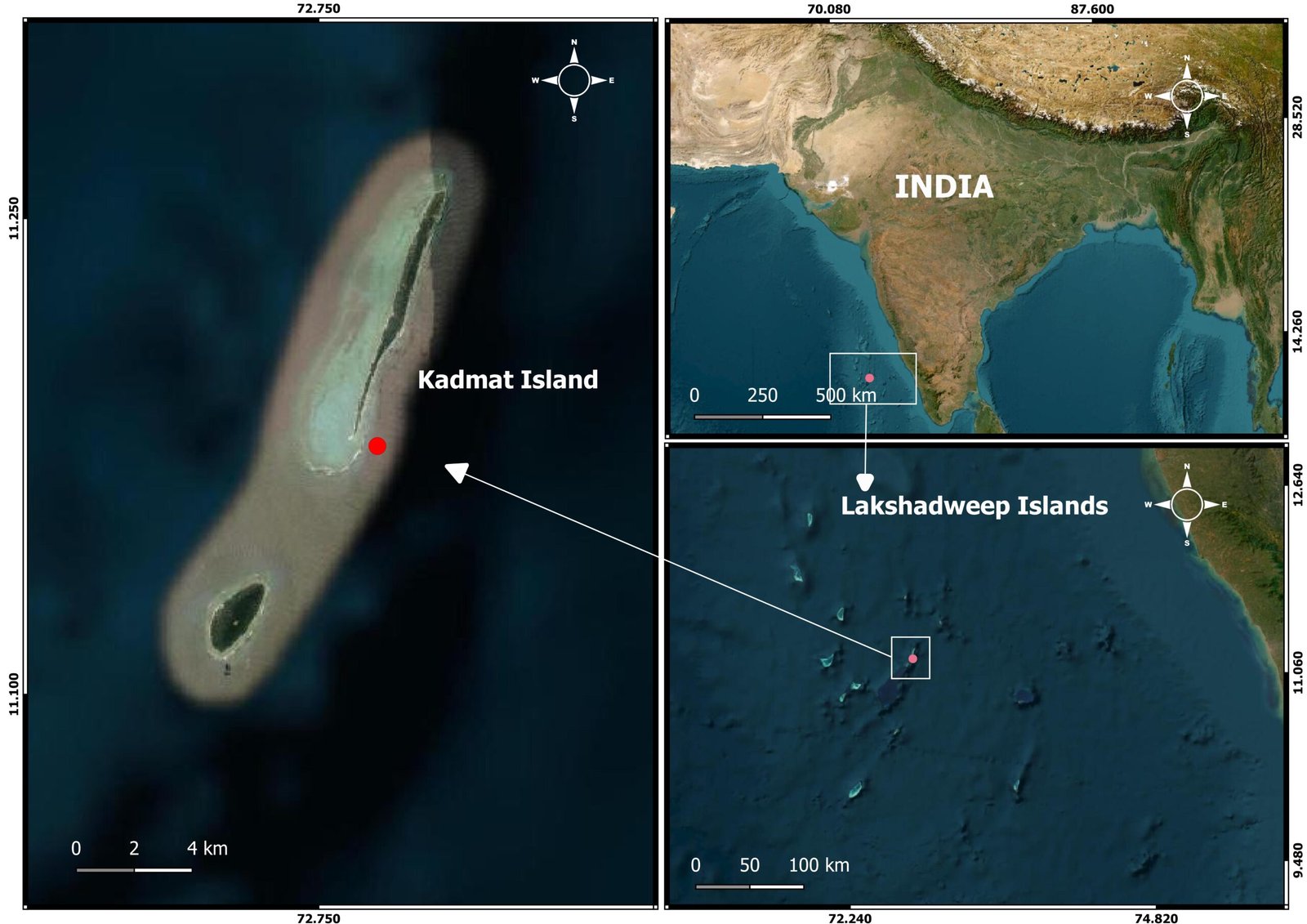 Figure 1. Map of Kadmat Island. The Red Circle Indicates the Location of the Leatherback Turtle Sighting.
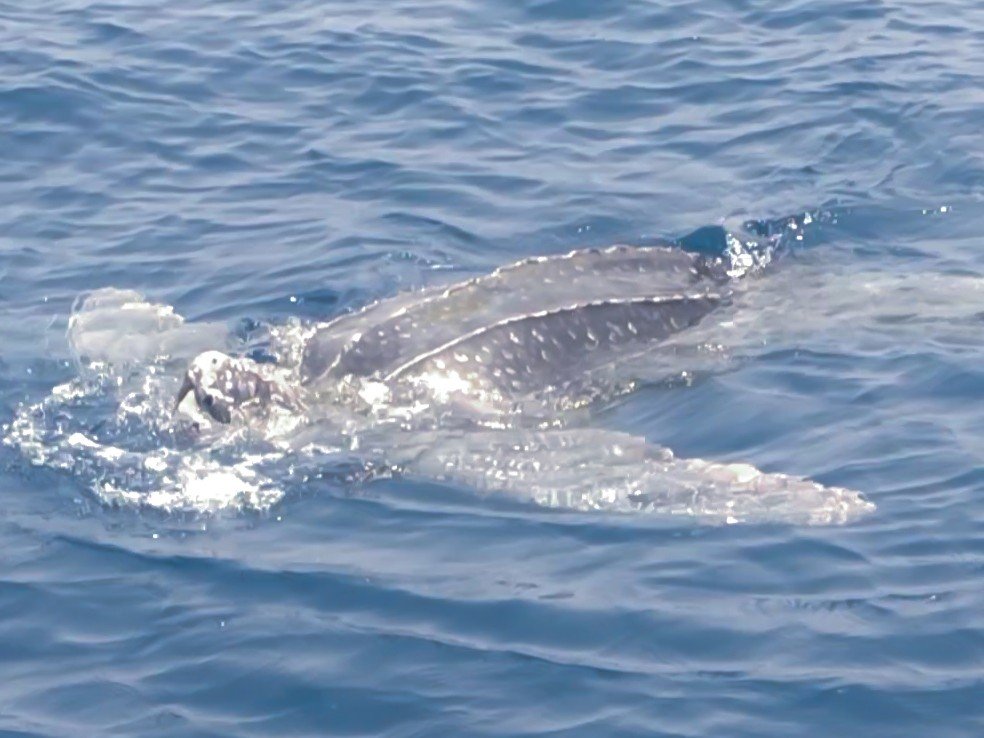 Figure 2. Dorsal View of the Leatherback Turtle Sighted at Kadmat Island. (Photo credit: Aboosayeed A.M.)
The present sighting at Kadmat Island therefore represents a notable rediscovery. This occurrence may indicate previously undocumented migratory routes through the Arabian Sea, linked to oceanographic conditions such as prey (jellyfish) abundance, or broader ecological changes influencing species distribution. Given the species’ global conservation status as Vulnerable (Wallace et al., 2013), such records carry significant implications for regional marine biodiversity assessments and conservation planning. This finding underscores the importance of integrating traditional ecological knowledge with modern scientific monitoring. This observation constitutes the first contemporary evidence of the species in Lakshadweep waters. It also highlights the need for systematic, long-term observation efforts in Lakshadweep to better understand the occurrence patterns of rare and migratory marine megafauna.
Acknowledgements
The authors sincerely thank the crew of the fishing craft Amina Beebi for their enthusiasm and responsible reporting of this important sighting. The authors also acknowledge Dr. Kartik Shanker for his valuable support and constructive feedback during the preparation of this manuscript.
Literature cited:
Andrews, H.V. & K. Shanker. 2002. A significant population of leatherback turtles in the Indian Ocean. Kachhapa 6: 17.
Andrews, H.V., S. Krishnan & P. Biswas. 2006. Distribution and status of marine turtles in the Andaman and Nicobar Islands. In: Marine Turtles of the Indian Subcontinent (eds. Shanker, K. & B.C. Choudhury). Pp. 33-57. Universities Press: Hyderabad, India.
Bhaskar, S. 1978. Turtles and other marine life in Lakshadweep. Hornbill April-June: 21-26.
Bhaskar, S. 1979. Notes from Lakshadweep. Hamadryad 4: 2-23.
Lal Mohan, R.S. 1989. Turtle resources. Bulletin of Central Marine Fisheries Research Institute 43: 176-178.
Shanker, K., A. Swaminathan, C. Pusapati, H. Ramesh, R. George & M. Manoharakrishnan. 2024. Monitoring Sea Turtles in India, 2008–2024. Dakshin Foundation: Bangalore, India.
Silas, E.G. 1984. Observations of turtles at sea and in the Lakshadweep. Sea turtle research and conservation, Bulletin of Central Marine Fisheries Research Institute 35: 59-61.
Tripathy, B., K. Shanker & B.C. Choudhury. 2006. The status of sea turtles and their habitats in the Lakshadweep Archipelago, India. Journal of the Bombay Natural History Society 103: 33.
Wallace, B.P., M. Tiwari & M. Girondot. 2013. Dermochelys coriacea. The IUCN Red List of Threatened Species 2013: e.T6494A43526147. https://doi.org/10.2305/IUCN.UK.2013-2.RLTS.T6494A43526147.en. Accessed on May 20, 2026.